
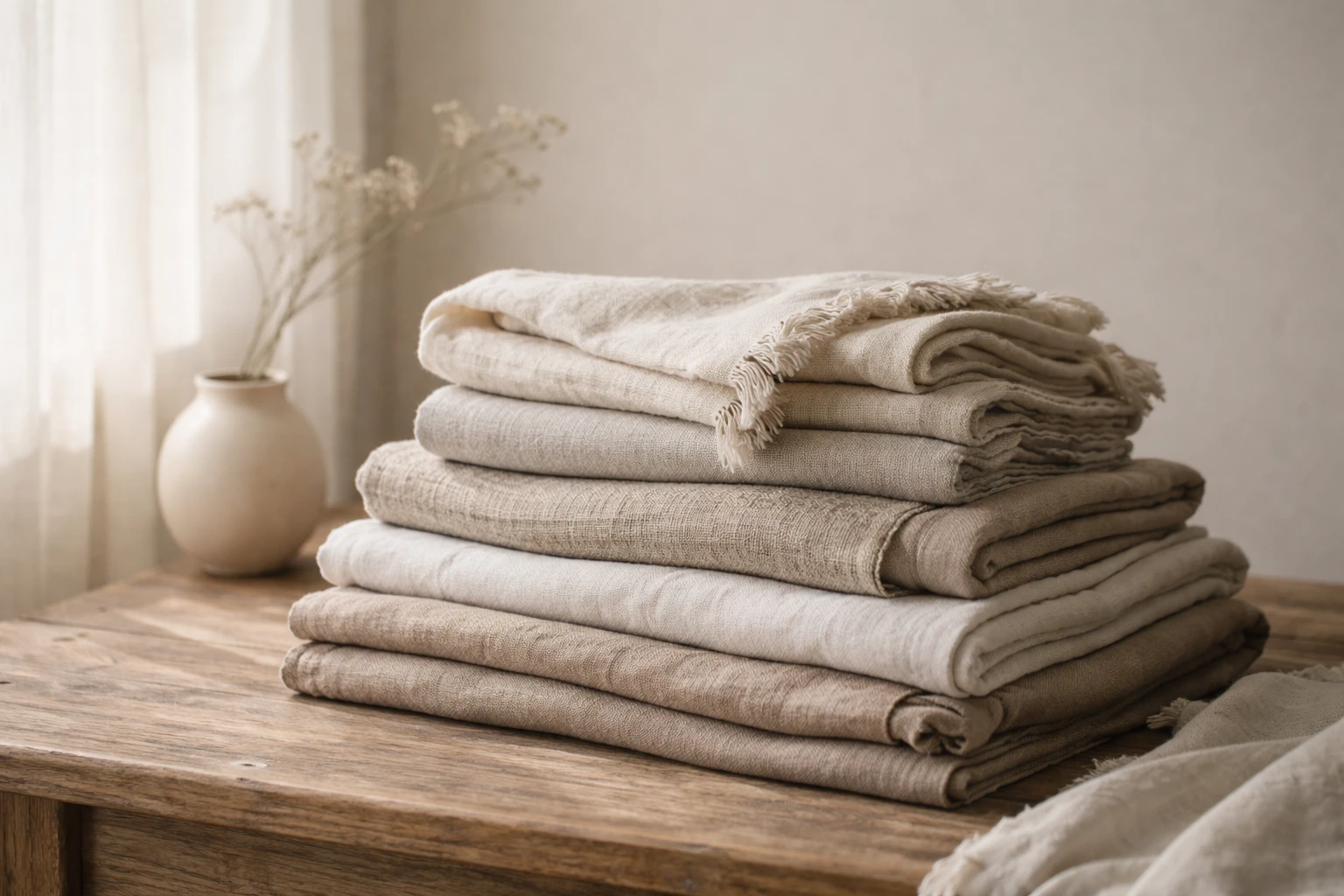
If you’ve ever tried to downsize your wardrobe or build a capsule closet, you already know the hardest part isn’t choosing what to keep. It’s deciding what happens to the clothes that no longer fit your life—but still feel too considered to discard.
Old clothes tend to linger. Not because they’re useful in the usual sense, but because they carry memory, texture, and time. When downsizing or living with fewer pieces, those leftover garments often raise a quieter question: does letting go always have to mean letting something leave entirely?
For many homes, the answer isn’t resale or donation. It’s reuse—not as a craft project, but as a shift in how we allow familiar materials to remain part of daily life.
When Clothes Stop Being Worn
Clothing usually exits our wardrobes long before it wears out. Styles change. Bodies change. Routines change. What remains is fabric that’s still durable, familiar, and often more comfortable than anything new.
This in-between stage—when something is no longer worn but not yet waste—is where many downsizing efforts stall. Letting go feels wasteful. Keeping everything feels heavy.
Reusing old clothes within the home offers a third option. Instead of asking whether an item still belongs in your closet, you ask whether it still belongs in your everyday environment.
From Fabric to Function
Most clothing fabrics were designed to handle friction, washing, and repeated use. Those same qualities make them well suited to life beyond the wardrobe.
Scarves can become table runners or light throws. Denim often works well as cushion covers that age gracefully. Knitwear finds new purpose as draft stoppers or layered textiles where warmth matters more than appearance.
The point isn’t transformation for its own sake. It’s continuity—allowing materials you already live with to keep serving a purpose, just in a quieter role.
Why This Feels Different Than Buying “Eco” Decor
Sustainable decor often promises responsibility through purchase. Reused clothing does the opposite. It removes a decision instead of adding one.
Over time, these small decisions accumulate, shaping how a home feels day to day—often through habits so subtle they go unnoticed.
There’s also an emotional durability at work. Objects made from familiar materials tend to stay longer. They don’t rely on trend or presentation. They remain because they already belong.
The Line Between Reuse and Clutter
Not every piece of clothing deserves a second life indoors. Reuse works best when it follows the same rules as intentional ownership.
- Each reused item should serve a clear function.
- If it isn’t visible or used regularly, it doesn’t need to stay.
- Reused objects should replace something—not simply add more.
This is often why homes can still feel crowded even after downsizing—not because there are too many things, but because some objects remain visually unresolved within daily space.
Thoughtful reuse works best when it reduces visual noise rather than rearranging it, keeping objects present without making them compete for attention.
In homes shaped by fewer choices and slower decisions, reuse often becomes less about creativity—and more about continuity.
A Softer Ending for Objects
Recycling old clothes into home decor isn’t about creativity or thrift. It’s about allowing objects to exit one role without forcing them out of your life entirely.
Sometimes sustainability isn’t about finding something new to bring in—it’s about letting what you already have stay, just a little differently.
Author & Editorial Review
- Author: Perla Irish — design writer covering interior styling, lighting behavior, and practical home organization, with hands-on experience addressing small-space living challenges.
- Editorial Review: This article was reviewed by the Living Bits & Things editorial team to ensure clarity, accuracy, and alignment with our internal quality and helpful-content standards. Learn more about our editorial review process.
Published: February 3, 2026 · Last updated: February 8, 2026
Leave a Reply