
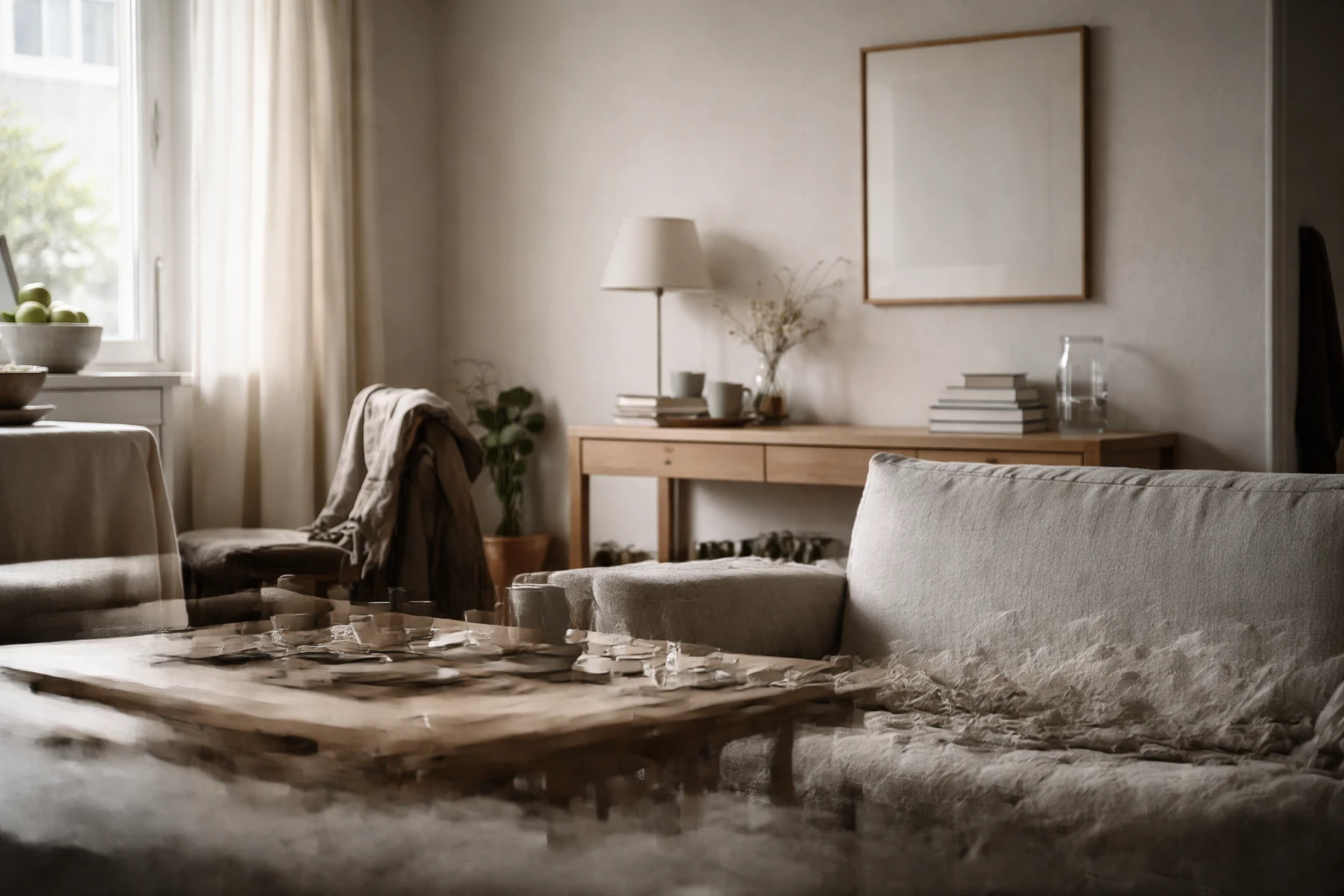
Introduction: When “Finished” Is a Feeling, Not a Condition
Some homes look clean but never quite feel done.
The counters are wiped. The floors are clear. Nothing is technically out of place. And yet, the space keeps pulling your attention back—asking to be checked, adjusted, or reassessed.
What’s missing isn’t effort. It’s resolution.
“Finished” isn’t a physical condition. It’s a mental pause. It’s the moment when a room stops asking for something else. When nothing feels unfinished, unresolved, or quietly waiting for attention.
And that feeling has surprisingly little to do with cleanliness.
What “Finished” Actually Means in Everyday Living
In real homes, “finished” rarely describes a final state.
It describes a moment when the space stops making requests.
A finished room doesn’t interrupt you. It doesn’t prompt a second glance or a quick fix before you leave. It fades into the background of daily life and lets your attention move elsewhere.
This is different from being tidy or organized. A room can be orderly and still feel unsettled. It can be functional and still feel mentally loud.
The difference lies in whether the space allows closure.
Why Clean Spaces Can Still Feel Unsettled
Cleanliness addresses hygiene. Resolution addresses perception.
A surface can be spotless and still feel wrong if it keeps drawing attention. If light behaves unpredictably on it. If contrast exaggerates small imperfections. If the eye keeps landing in the same place, searching for reassurance.
These interruptions don’t register as mess. They register as unfinished business.
The brain doesn’t care whether something is technically clean. It cares whether the visual signal has settled.
Visual Friction: When Surfaces Refuse to Go Quiet
Visual friction happens when materials, layouts, or lighting refuse to fade into the background.
It shows up in surfaces that exaggerate residue, reflect inconsistently, or hold contrast too sharply. In finishes that look calm in isolation but restless in daily use. In details that keep reasserting themselves long after the task is done.
This isn’t about good or bad materials. It’s about how they behave over time — which is why some fixtures, like black toilets, are often described as “unsanitary” even when hygiene itself isn’t the issue.
Some surfaces absorb variation. Others amplify it.
And the ones that amplify variation are the ones that keep rooms from feeling finished.
The Mental Cost of Spaces That Keep Asking for Attention
Every time a space asks to be checked again, it adds a small cognitive cost.
A glance becomes a pause. A pause becomes a micro-decision. Over time, those micro-decisions accumulate into fatigue.
This is why certain rooms feel heavier than others, even when they’re clean. Not because they require more work, but because they never fully resolve.
The effort isn’t physical. It’s attentional.
Why Small Homes Feel This More Intensely
In small homes, there’s less room for visual noise to dissipate.
Surfaces sit closer together. Reflections overlap. There are fewer places for the eye to rest. What might feel neutral in a larger space becomes dominant when the scale tightens — which helps explain why black toilets often feel heavier and more fatiguing in small bathrooms.
This is why small homes often feel “busy” even when they’re well maintained. The same visual friction exists—it’s just concentrated.
A single demanding element can shape the entire room.
When Organization Helps—and When It Makes Things Worse
Organization is often treated as the solution to unfinished spaces, even though many systems quietly increase mental load instead of reducing it.
When organization adds layers, containers, labels, or visual boundaries that require monitoring, it can increase the very friction it’s meant to solve.
A system helps when it simplifies perception. It hurts when it adds another thing to track.
This is why rigid organization systems sometimes fail in small homes. They introduce structure without reducing attention.
Materials That Fade vs. Materials That Demand Reassurance
Over time, materials reveal their true cost.
Some fade gracefully. They tolerate inconsistency. They allow small variations to pass without comment — a difference that becomes especially clear when comparing how black and white toilets behave in everyday use.
Others demand reassurance. They make residue visible. They respond dramatically to changes in light. They keep asking whether the task is really finished.
Neither is inherently wrong. But in everyday living, the materials that fade tend to support a sense of completion more easily.
The Real Question to Ask Before Changing Anything
When a room feels unfinished, the instinct is often to replace, upgrade, or reorganize.
But a better question comes first:
Does this element allow the space to stop asking for attention?
If the answer is no, the issue isn’t style, cleanliness, or effort. It’s behavior.
Conclusion: A Home Feels Finished When Nothing Is Waiting
A home feels finished when nothing is waiting to be fixed, checked, or reassured.
Not because everything is perfect—but because nothing is asking for more.
Finished isn’t a look. It’s a pause.
Author & Editorial Review
- Author: Perla Irish — design writer covering interior styling, lighting behavior, and practical home organization, with hands-on experience addressing small-space living challenges.
- Editorial Review: This article was reviewed by the Living Bits & Things editorial team to ensure clarity, accuracy, and alignment with our internal quality and helpful-content standards. Learn more about our editorial review process.
Published: February 2026 · Last updated: February 2026
Leave a Reply