
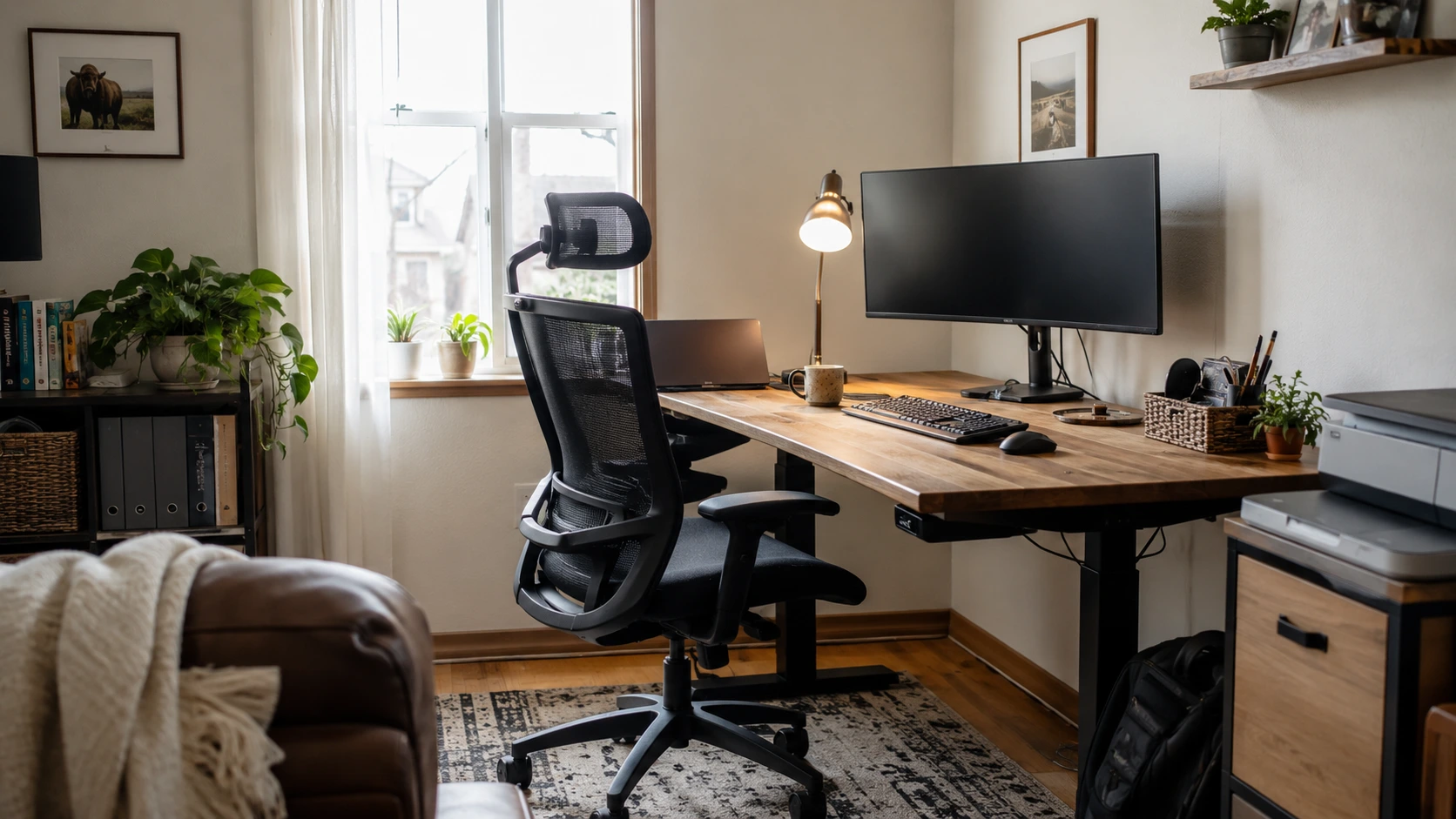
Most people do not decide to redo a home office because they suddenly want a prettier workspace.
Something stops working first.
Your back starts hurting halfway through the day. Video calls look awkward because the lighting feels terrible. The dining table slowly becomes permanent office storage, and the setup that felt temporary somehow turns into everyday life.
That is when many people realize the room no longer feels functional. It feels frustrating.
The good news is that fixing those frustrations rarely costs as much as people fear.
For most homeowners, a realistic DIY home office makeover cost falls somewhere between $300 and $1,500, depending on what already exists in the room, whether furniture needs replacing, and how much cosmetic work feels necessary.
If you already own a decent desk and chair, a meaningful upgrade may cost less than $300. Starting from an empty room or replacing uncomfortable furniture pushes the budget closer to $800–$1,500.
The mistake many people make is assuming productivity comes from buying more things. A better workspace comes from solving the problems that quietly make work harder: discomfort, clutter, poor lighting, noise, or constant distractions.
The Quick Answer: How Much Does a DIY Home Office Makeover Cost?
For most people, the answer depends less on aesthetics and more on what already exists in the room.
| Type of Office Makeover | Realistic Cost Range |
|---|---|
| Basic refresh using existing furniture | $150–$400 |
| Moderate DIY makeover | $500–$900 |
| Full office setup from scratch | $1,000–$1,500+ |
The biggest difference comes down to one simple question:
Are you improving a workspace—or building one from nothing?
Replacing an uncomfortable chair and repainting the room feels manageable. Buying a desk, chair, lighting, shelving, and storage all at once changes the budget quickly.
Most people underestimate how much comfort matters. A workspace that looks beautiful but leaves you uncomfortable after three hours rarely feels like money well spent.
Where the Money Actually Goes
Many office makeover articles online focus heavily on stylish accessories and aesthetic upgrades.
Real budgets look different. Most of the money disappears into furniture, lighting, storage, and the smaller fixes people rarely think about until the room stops functioning well.
For most DIY projects, spending falls into a few predictable categories.
1. Desk and Chair Costs: $200–$900+
Furniture takes the largest share of most home office budgets.
A cheap desk may look fine online but feel unstable after a few months. An uncomfortable chair becomes expensive the moment you start noticing back pain halfway through the workday.
If you work from home regularly, this is one place where spending slightly more makes a noticeable difference.
- Budget desk: $80–$200
- Mid-range desk: $200–$500
- Ergonomic chair: $150–$600+
The goal is not luxury. It is building a workspace that does not quietly wear you down every day.
Many homeowners regret spending heavily on decorative upgrades while ignoring the chair they sit in every day.
2. Lighting and Small Functional Upgrades: $50–$250
Lighting changes how a workspace feels far more than most homeowners realize.
Harsh overhead lighting creates fatigue. Dark rooms feel mentally draining after long workdays. Even a simple desk lamp or better bulb placement changes how long the space feels comfortable to sit in.
Smaller upgrades often create more noticeable improvement than expensive décor:
- Desk lamps
- Warmer lighting
- Better bulb placement
- Cable management
- Monitor risers
- Small ergonomic accessories
Sometimes the problem is not the office itself. The room simply feels visually exhausting.
If your workspace constantly feels distracting, reducing visual clutter matters more than buying another organizer. Visual clutter quietly affects focus in ways many people overlook.
3. Paint and Cosmetic Updates: $100–$400
Few upgrades change the feeling of a room faster than paint.
But cosmetic projects also create hidden spending surprisingly fast.
What starts as “just repainting” turns into primer, rollers, wall patching, trim touch-ups, outlet covers, and supplies nobody remembered to budget for.
- Paint supplies: $60–$150
- Minor wall repairs: $30–$100
- Shelving or cosmetic improvements: $50–$200
Neutral colors age better, especially when the office doubles as a guest room, bedroom, or shared living space.
4. Storage and Organization: $50–$300
This is where spending quietly gets out of control.
A cluttered workspace feels stressful, so the instinct is to buy organizers immediately. The problem is that organization works best when it follows habits—not aesthetics.
Instead of asking:
How do I make this office look organized?
Ask:
What creates friction every day?
Messy charging cables? No storage for paperwork? Printers sitting in awkward places?
Solving those problems first almost always creates a better office than buying decorative storage bins that never match real routines.
Smaller homes make this harder. Spaces that look tidy still feel frustrating when organization prioritizes appearance over daily use. Organizing for use instead of appearance changes how small workspaces function.
Hidden Costs People Forget
Most DIY office budgets miss the smaller expenses that quietly stack up.
- Extension cords
- Surge protectors
- Monitor arms
- Wall repair materials
- Delivery fees
- Furniture disposal
- Cleanup costs
Cleanup costs surprise people more than expected.
Old desks, damaged shelving, broken storage systems, and worn flooring pile up quickly during a room conversion. Once debris starts taking over the room, some homeowners decide hauling everything themselves feels harder than expected and look into local removal services such as Waste Removal USA. Smaller refreshes stay manageable with donation pickups or standard curbside disposal.
What a $300 Home Office Actually Looks Like
A smaller budget stretches further than most homeowners assume.
At around $300, most homeowners are not building a dream office. They are fixing what feels frustrating.
That often means:
- A better office chair or seat support
- A basic desk replacement
- Improved lighting
- A small paint refresh
- Simple storage fixes
No, the room probably will not look magazine-ready. But it often feels dramatically easier to sit in for a full workday, which matters far more than appearances.
Comfort beats aesthetics more often than people expect.
What a $700–$900 Home Office Budget Looks Like
This budget range creates the biggest noticeable difference for many homeowners.
At this level, the room starts feeling intentional instead of temporary.
Most people upgrade:
- A more supportive ergonomic chair
- A larger or sturdier desk
- Better lighting
- Paint or cosmetic improvements
- Storage systems
- Cable organization
- Functional décor
The biggest shift is not visual.
The room starts working better. You stop adjusting around discomfort and start using the space without thinking about it.
What a $1,200+ DIY Home Office Setup Looks Like
A larger budget makes sense when the office supports daily work, income, or long hours at a desk.
Higher spending often happens because the room starts empty or needs more substantial upgrades.
- Premium ergonomic seating
- Larger desks or standing desks
- Dual monitors
- Improved lighting systems
- Acoustic upgrades
- Storage furniture
- A more complete room redesign
Bigger budgets do not automatically create better workspaces.
Many expensive offices look impressive but never feel comfortable to work in. The goal is not building the most expensive workspace. The goal is removing friction from everyday work.
Small Homes Make Home Offices More Complicated
Dedicated office rooms sound ideal, but many people work from spaces never designed for work.
That often means:
- Bedroom corners
- Dining areas
- Living rooms
- Guest rooms
- Shared multipurpose spaces
Shared spaces change the budget in ways many homeowners do not anticipate.
Instead of designing a traditional office, the real challenge becomes creating separation between work and everyday life.
Sometimes that means furniture. Sometimes it simply means creating boundaries inside the room.
If your workspace shares space with daily life, visual separation often matters more than expensive upgrades. These room divider ideas for flexible spaces help create separation without turning the room into a permanent office.
Some homes also feel mentally busy even when they look clean. That feeling often comes from too many things competing for attention at once. Small homes feel busier than they look, especially when workspaces overlap with everyday living.
The Biggest DIY Home Office Mistakes That Waste Money
Buying Furniture Before Measuring
Oversized desks make rooms feel cramped surprisingly fast.
A desk may technically fit but still leave too little space for movement, storage, or cables. Measuring first prevents expensive frustration later.
Copying Aesthetic Setups Online
Beautiful workspaces online rarely reflect how real people spend eight hours working.
Many highly photographed offices prioritize aesthetics over lighting, posture, or comfort.
Prioritizing Appearance Over Comfort
A beautiful chair nobody wants to sit in becomes expensive decoration.
Comfort matters more after long workdays than almost any decorative upgrade.
Buying Organization Before Understanding Habits
Buying storage too early creates clutter disguised as organization.
Living in the room for a while reveals what actually creates friction—and what never needed solving in the first place.
Trying to Finish Everything at Once
The best home offices rarely come together in one weekend.
Most improve gradually. Fix the biggest frustration first, then let the room tell you what needs attention next.
When DIY Stops Making Sense
DIY works well for:
- Painting
- Furniture assembly
- Lighting upgrades
- Storage improvements
- Small cosmetic changes
Some upgrades deserve professional help from the beginning.
- Electrical work
- Built-in shelving
- Structural changes
- HVAC adjustments
- Major renovations
Fixing mistakes later often costs more than hiring help in the first place.
Not every office problem needs to become a weekend experiment.
Final Thoughts
A DIY home office makeover does not need to feel expensive to make a meaningful difference.
Good workspaces rarely come together all at once. Most improve in stages as daily frustrations become harder to ignore.
For some people, that starts with better lighting. For others, it means replacing a painful chair or finally dealing with clutter that quietly drains focus every day.
Most people do not regret skipping decorative upgrades. They regret waiting too long to fix the things that quietly made work harder every day.
Spend money where discomfort lives—not where trends tell you to.
Frequently Asked Questions
What is a realistic DIY home office makeover budget?
For most homeowners, a realistic budget falls between $300 and $900. A smaller refresh using existing furniture may cost far less, while starting from an empty room often pushes the budget past $1,000.
What upgrade makes the biggest difference in a home office?
For many people, comfort upgrades create the biggest improvement. Better seating, lighting, and reducing clutter often change how productive the room feels faster than decorative purchases.
Is an ergonomic chair worth the money?
If you work from home regularly, yes. Discomfort compounds over time. A chair that supports posture often matters more than decorative upgrades or expensive accessories.
Can a small bedroom realistically work as a home office?
Yes, but flexibility matters. Small rooms work better when the setup adapts to daily life rather than forcing a traditional office layout into limited space.
Should I buy everything for a home office at once?
Most people regret rushing purchases. The best workspaces evolve over time because daily use reveals what actually feels frustrating.
Author & Editorial Review
- Author: Perla Irish — A design and home improvement writer covering interior materials, everyday home decisions, safety-aware planning, and real-world performance.
- Editorial Review: Living Bits & Things editorial review focused on clarity, accuracy, balanced explanations, real-world usability, and long-term relevance. Learn more about our editorial review process.
Published: August 2025 · Last updated: May 2026
Leave a Reply