
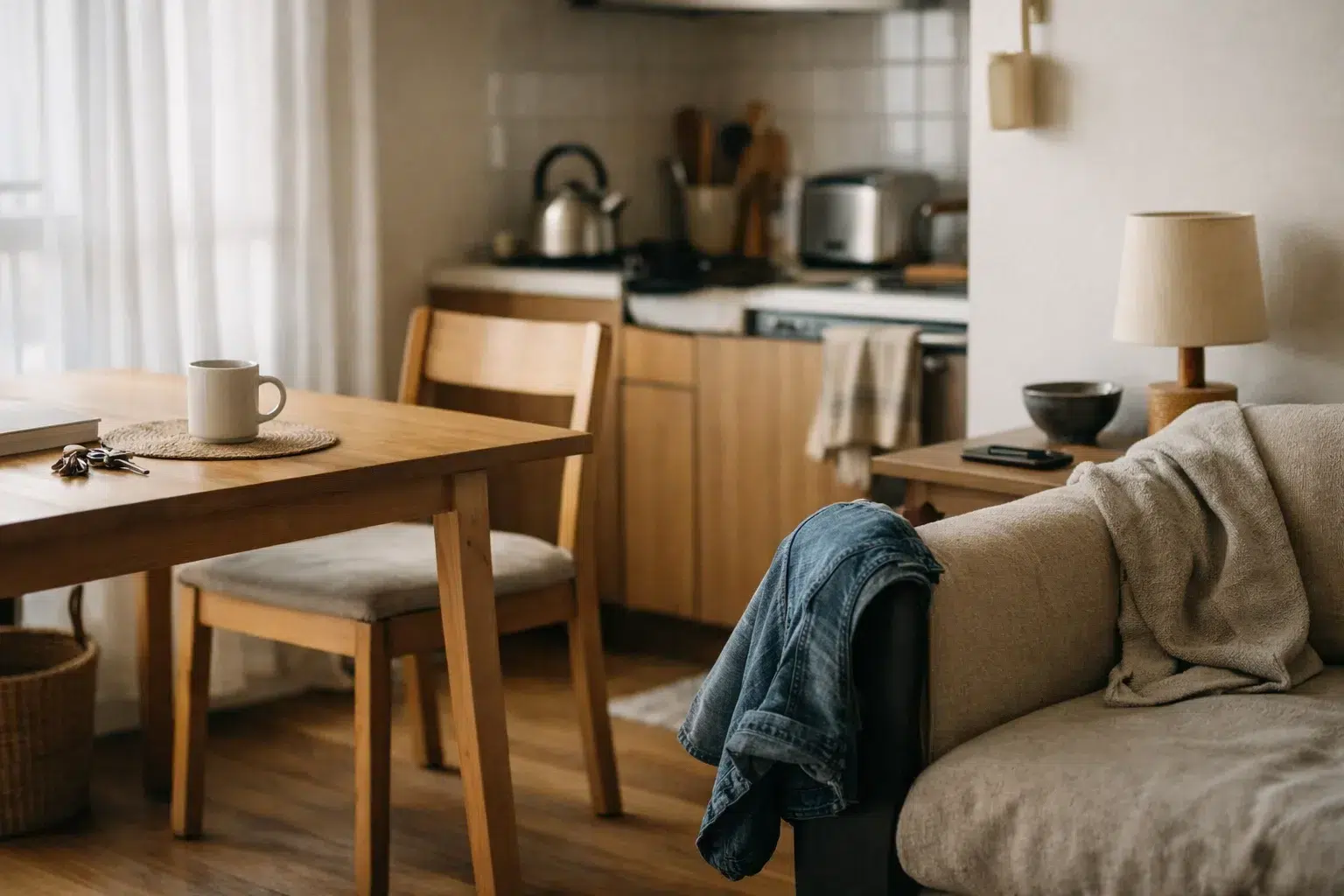
Most small homes don’t change all at once. They shift quietly, shaped by small habits repeated without much attention.
What gets set down first. What waits until later. What never quite returns to where it started.
These moments don’t feel significant on their own. Together, they begin to define how a space feels day to day.
Why Small Homes Respond So Quickly
In larger homes, habits have room to spread out. In smaller ones, they overlap.
A single surface might support several parts of the day. It holds work in the morning, meals in the evening, and whatever arrives in between.
With less distance between actions, the effects of habits show up faster—sometimes before anyone realizes something has changed.
The Meaning Behind “Just for a Moment”
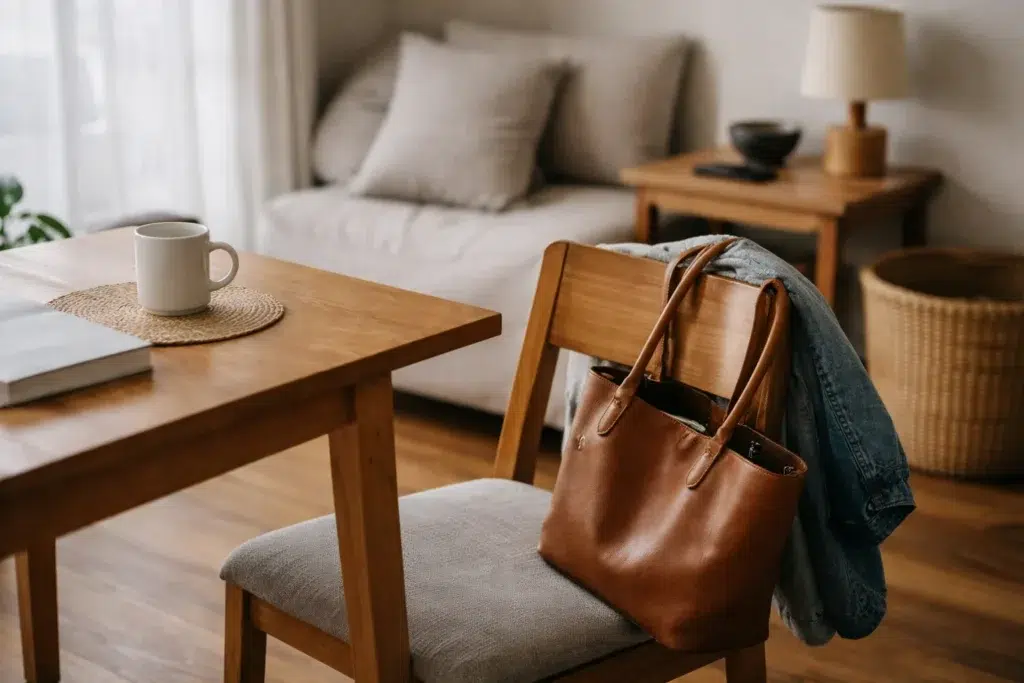
Many patterns begin with objects placed temporarily.
A bag set near the door instead of put away. A cup left on the table because the next task is already waiting. A jacket draped over a chair because reaching for a hanger feels like one step too many.
These choices aren’t careless. They reveal how time, energy, and attention are actually moving through the home.
When Habits Start Moving Faster Than the Space
As routines speed up, homes that aren’t aligned with those routines begin to resist them.
People compensate without noticing. Steps are skipped. Decisions are postponed. Objects are placed where they can be reached again quickly.
This is explored more closely in where small homes get messy, where clutter shows up as information rather than failure.
Why Systems Arrive After Habits
Organization systems are often introduced as solutions. By the time they appear, habits are already in motion.
Without acknowledging those existing patterns, even thoughtful systems can feel out of step—asking for behavior the space itself doesn’t support.
This is why organizing a small apartment tends to work best when it begins with observation rather than correction.
What Small Homes Are Quietly Asking For
Most small homes aren’t asking for more control.
They’re asking for alignment—between how people actually move and how the space responds.
When habits and space begin to support each other, effort drops. When that alignment is missing, homes often feel perpetually unresolved—a pattern explored in why small homes rarely feel finished. The home may still look lived-in, but it feels easier to exist in.
Once these patterns become visible, keeping a small home organized is less about fixing mess and more about maintaining what already works. This approach to keeping a small home organized builds on that idea by focusing on routines that support daily life.
Final Thoughts
Small homes are shaped less by big decisions and more by habits that repeat without comment. Noticing those habits is often the first step toward making a space feel lighter.
Author & Editorial Review
- Author: Perla Irish — design writer covering interior styling, lighting behavior, and practical home organization, with hands-on experience addressing small-space living challenges.
- Editorial Review: This article was reviewed by the Living Bits & Things editorial team to ensure clarity, accuracy, and alignment with our internal quality and helpful-content standards. Learn more about our editorial review process.
Published: January 6, 2026 · Last updated: February 7, 2026
Leave a Reply