
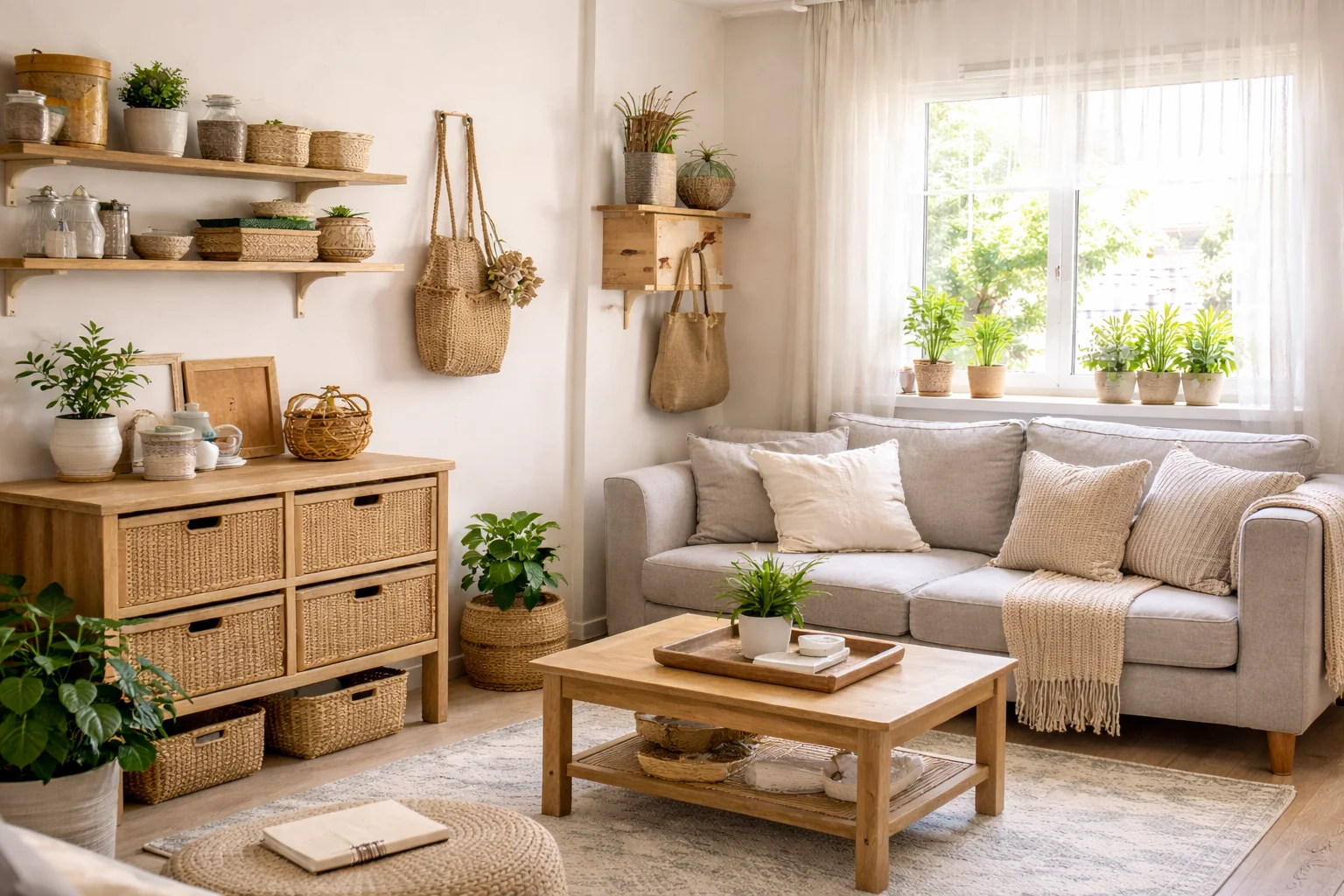
Living in a small apartment can feel frustrating when clutter starts to build up faster than expected. Even when you don’t own many things, limited space makes every item more noticeable. A few misplaced objects can quickly make a room feel crowded or harder to relax in.
What often gets overlooked is that organization isn’t really about buying more furniture. It’s about how space is used day to day, and how small habits quietly shape the way a home feels. With a few thoughtful adjustments, it’s possible to make a small apartment feel calmer and easier to manage without spending extra money.
Many people living in small apartments notice the same pattern over time: even after tidying up, clutter slowly returns to the same spots. This usually isn’t a motivation issue. It’s a sign that the space isn’t supporting everyday routines in a practical way.
Why Small Apartments Get Messy So Easily
In small apartments, clutter builds up for predictable reasons. These patterns show up again and again, regardless of how tidy someone tries to be.
- Items are placed temporarily with no clear return spot
- Limited storage makes small habits more visible
- Multi-use spaces blur boundaries between activities
- Daily routines change faster than storage systems
Another common issue is that items don’t always have a clear place to belong. When things are stored wherever there happens to be room, they become harder to put away consistently. Over time, surfaces fill up and organization starts to feel tiring instead of helpful.
Taking a step back to understand how your space actually functions can make a noticeable difference. These home organization tips for small spaces help highlight where clutter usually begins and how small habit shifts can reduce it.
Simple Ways to Organize a Small Apartment
Use What You Already Have First
Before buying organizers or containers, it helps to look around at what you already own. Boxes, baskets, jars, or unused containers often work just as well when used intentionally.
Starting this way removes pressure. When people buy storage too early, they often end up forcing their habits to fit the product. Using what you already have makes it easier to see what actually works before committing to anything new.
For example, an old shoebox can be repurposed as a drawer divider for socks or accessories, especially if you wrap it in fabric or paper to keep it from catching. Empty glass jars or jam containers often work well for pens, chargers, or small tools — adding a rubber band around the outside can even help prevent items from slipping when stored on a shelf.
What This Can Look Like in Real Rooms
- In a small bathroom: Glass jars that once held food can be reused to hold cotton swabs, makeup brushes, or razors under the sink. Adhesive hooks on the inside of cabinet doors can keep towels or hair tools off limited counter space.
- In a bedroom: Shoeboxes or shallow storage boxes can act as drawer dividers for socks and accessories, reducing visual clutter without adding new furniture. A spare basket near the bed can collect items that usually end up on the nightstand.
- In a living area: One existing tray or container can become a dedicated spot for remotes, chargers, or notebooks, preventing small items from spreading across tables.
Store Items Where You Naturally Use Them
One of the most effective ways to stay organized is to keep items close to where they’re actually used. When storage matches daily routines, putting things away becomes more automatic.
For example, cleaning supplies don’t always need to live in one central spot if that setup makes daily tasks harder. Smaller groupings placed near where cleaning actually happens often work better in real life.
This can look different depending on how you live. Some people keep placemats or cutlery closer to the dining table instead of deep inside kitchen cabinets. Others store chargers near where they sit most often, rather than in a drawer across the room. These small adjustments reduce friction and make routines easier to maintain.
Before making this change, many people notice they spend extra time walking back and forth to put things away. Afterward, daily tasks tend to feel smoother, simply because items are already where they’re needed. It’s a small shift, but it often has a noticeable impact on how easy a space feels to maintain.
Make Use of Vertical and Hidden Areas
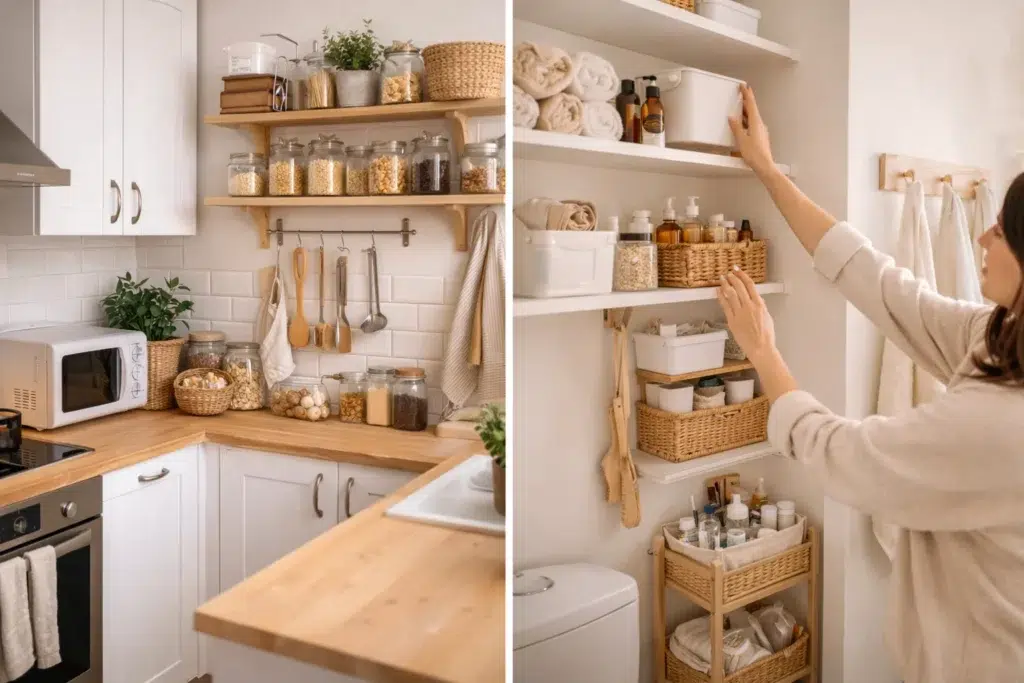
In small apartments, vertical space often goes unused. Walls, the backs of doors, and the inside of cabinets can all help take pressure off crowded surfaces.
This is something many people only notice after trying a few different setups. What looks good in theory doesn’t always feel natural in daily life, especially in small homes where everything overlaps.
If you want more practical inspiration, these storage ideas for small homes show ways to use vertical and tucked-away areas without making rooms feel cramped.
Group Similar Items Together
When similar items are scattered around, it becomes harder to keep track of them. You may end up buying duplicates or constantly moving things from one spot to another. Keeping related items together doesn’t just look better — it quietly removes a lot of daily friction.
Keep Everyday Surfaces Mostly Clear
Flat surfaces naturally attract clutter, especially in smaller homes. Instead of aiming for perfection, it helps to set gentle limits.
Choose one or two essentials that can stay visible, and return the rest to their place at the end of the day. This small habit alone can make a room feel noticeably calmer.
Common Mistakes That Make Small Apartments Feel Messy
Even with good intentions, certain habits can quietly undo progress. These are some of the most common patterns that tend to make small apartments feel messy again.
- Buying storage before understanding what actually needs organizing
- Keeping items “just in case” without a clear reason
- Spreading similar items across multiple rooms
- Trying to reorganize everything at once
- Hiding clutter instead of reducing it
A Simple Checklist to Get Started
- Choose one small area to focus on
- Remove items you no longer use
- Group similar things together
- Decide where each group belongs
- Stop once the space feels functional, not perfect
Everyday Items That Can Help (If You Already Have Them)
These items aren’t required, but they can make organization easier when you already own them or find simple versions at home.
- Small baskets or containers
- Drawer dividers
- Hooks or adhesive hangers
- Stackable boxes
- Simple labels
Once a space is organized, the next challenge is keeping it that way. This guide to staying organized without constant cleaning explores how small habits and simple reset points help organization last over time.
Final Thoughts
Organizing a small apartment isn’t about creating a perfect setup or following strict rules. It’s about shaping your space so it supports how you actually live, day to day. Small, thoughtful changes tend to last longer than big overhauls.
When your home starts working with your routines instead of against them, staying organized becomes easier — and far less stressful.
Author & Editorial Review
- Author: Perla Irish — design writer covering interior styling, lighting behavior, and practical home improvement, with hands-on experience addressing small-space living challenges.
- Editorial Review: This article was reviewed by the Living Bits & Things editorial team to ensure clarity, accuracy, and alignment with our internal quality and helpful-content standards. Learn more about our editorial review process.
Last updated: January 2026
Leave a Reply