
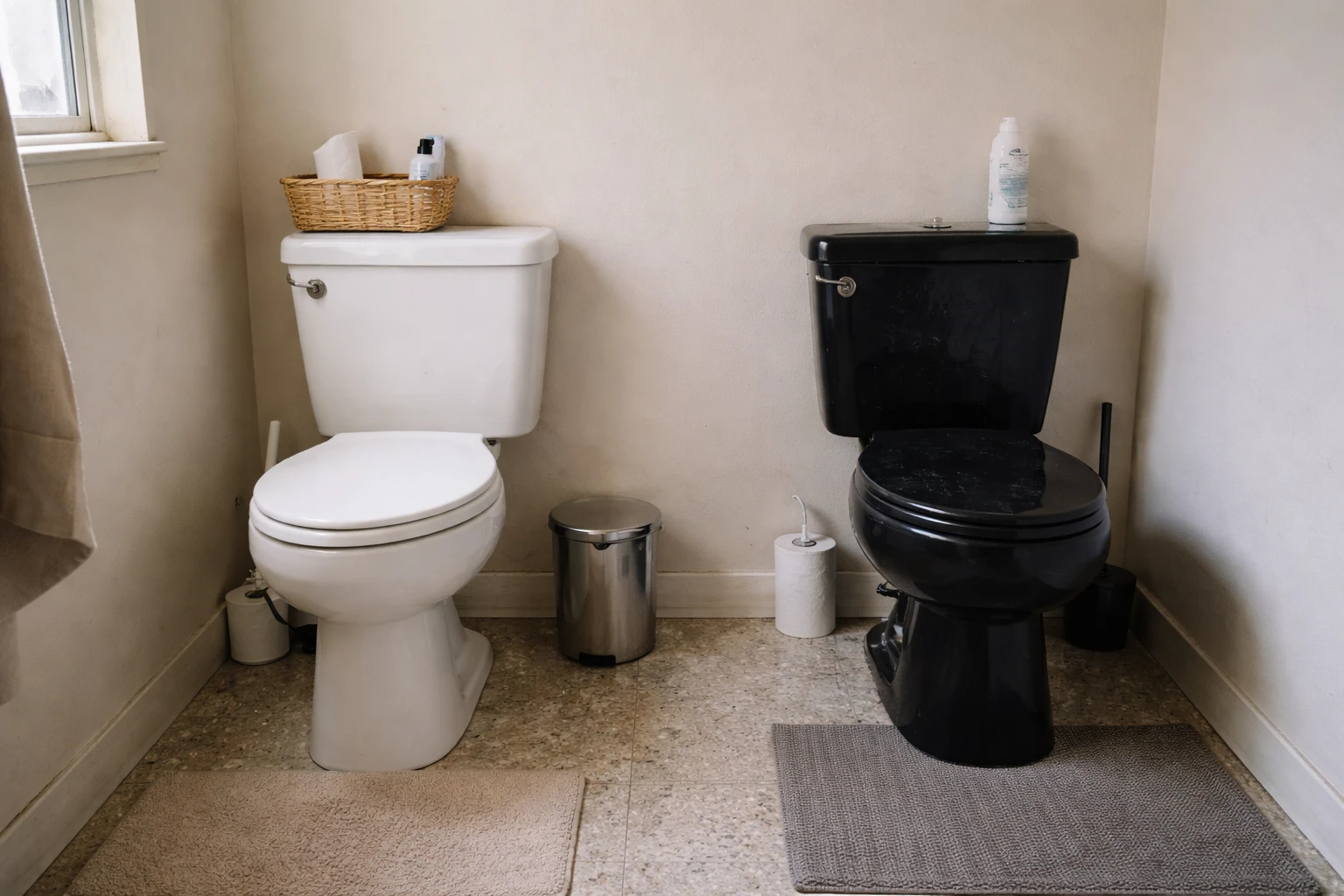
Choosing between a black or white toilet is usually framed as a style decision. In daily life, it’s something else entirely.
The difference isn’t about cleanliness or hygiene, durability, or cleaning frequency. It shows up later — in how often the toilet pulls your attention once it’s already been used and wiped down.
Some fixtures disappear the moment you leave the room. Others keep asking for a second look. Over months of everyday use, that difference becomes the real measure of what’s easier to live with.
What “Easy to Live With” Actually Means
In a bathroom, ease isn’t about how impressive something looks when it’s new. It’s about how little thought it requires once it becomes part of your routine.
An easy fixture doesn’t interrupt you. It doesn’t invite checking, adjusting, or second-guessing. It fades into the background and lets the room feel finished without effort.
This is where black and white toilets begin to behave very differently.
Why White Toilets Disappear More Easily
White porcelain has been standard for so long that most bathrooms are built around it — visually and behaviorally.
Water marks, light residue, and minor splashes tend to blend into the surface instead of standing out. Under common bathroom lighting, white reflects evenly, smoothing over small inconsistencies.
The result is quiet. Once cleaned, a white toilet stops asking for attention. It doesn’t need reassurance. It simply occupies its place and allows the rest of the room to settle.
Why Black Toilets Keep Drawing the Eye
Black toilets don’t fail because they’re unhygienic. They fail because they’re visually honest.
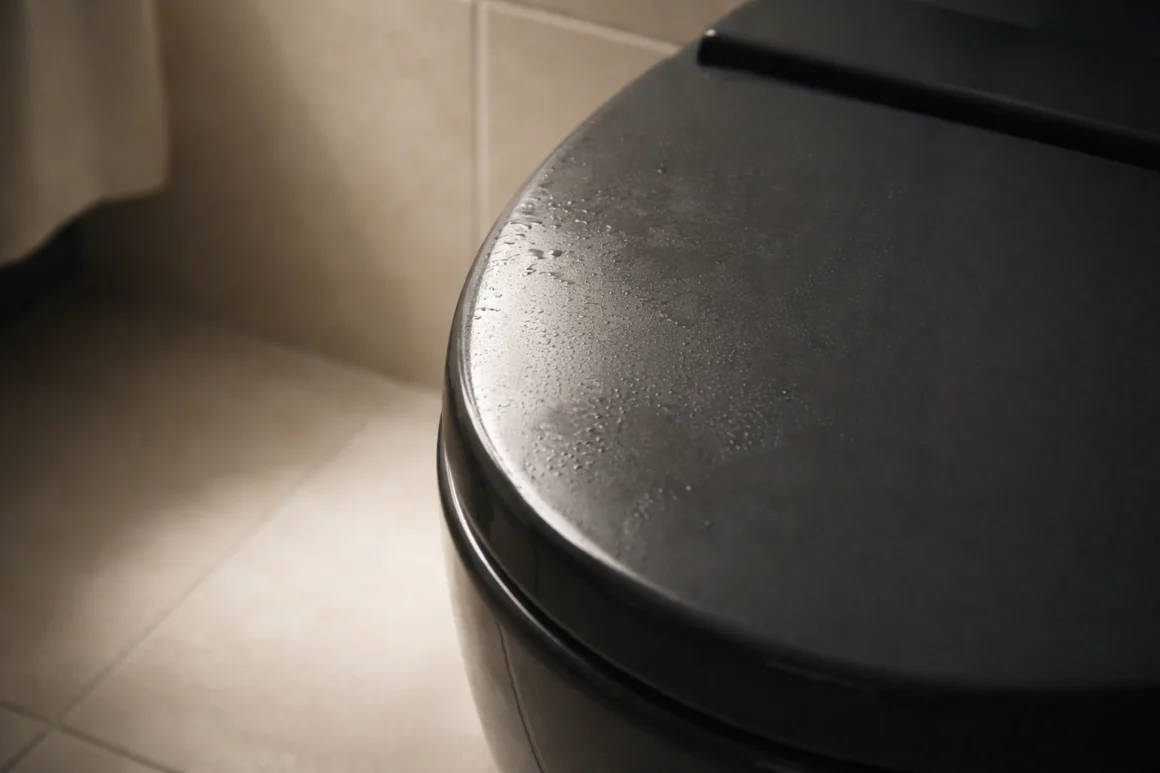
Dark surfaces reveal contrast. Water marks, mineral traces, and light splashes remain visible instead of disappearing. Under directional lighting, reflections sharpen rather than soften.
Even when the toilet is clean, it can look unsettled — as if something still needs attention. That visual signal triggers extra checking, not because something is wrong, but because the surface never fully goes quiet.
Maintenance vs. Mental Effort
Black toilets don’t necessarily require more cleaning. What they require is more confirmation.
A glance turns into a pause. A pause turns into a wipe. The effort isn’t physical — it’s cognitive. The fixture keeps asking whether it’s finished.
White toilets rarely create that loop. Once they’re cleaned, the brain moves on.
Lighting Is the Silent Decider
Bathrooms rely heavily on overhead and vanity lighting. On white porcelain, light spreads. On black ceramic, it fragments.
A black toilet that looks calm in a showroom can feel restless at home, especially under cool LEDs or uneven lighting. The fixture hasn’t changed — the environment has.
This is one reason black toilets feel harder to live with in small or shared bathrooms, where lighting conditions are rarely ideal.
This effect becomes more pronounced as bathrooms get smaller, where visual weight has fewer places to dissipate.
When Black Toilets Make Sense
Black toilets can work — but only in spaces designed to support them.
Bathrooms with warm, diffuse lighting. Matte finishes that reduce glare. Low visual contrast across walls, floors, and fixtures. Minimal surface clutter.
They also fit households where wiping a surface is already part of the rhythm, not something that feels like extra work.
When White Toilets Win by Default
In most everyday settings — small homes, rentals, shared bathrooms, inconsistent lighting — white toilets quietly outperform.
They tolerate imperfection. They absorb variation. They allow the room to feel settled even when conditions aren’t controlled.
The ease comes not from effort, but from forgiveness.
The Question That Matters More Than Color
The real choice isn’t black versus white.
It’s whether a fixture supports the way a space is actually used — without demanding constant attention.
In small homes especially, the easiest things to live with are the ones that disappear. They don’t announce themselves. They don’t ask for reassurance. They let the room feel finished without effort.
If you’re exploring how visual friction shows up elsewhere, you may find it helpful to read why black toilets often feel unsanitary even when they’re clean.
Author & Editorial Review
- Author: Perla Irish — design writer covering interior styling, lighting behavior, and practical home organization, with hands-on experience addressing small-space living challenges.
- Editorial Review: This article was reviewed by the Living Bits & Things editorial team to ensure clarity, accuracy, and alignment with our internal quality and helpful-content standards. Learn more about our editorial review process.
Published: January 2026 · Last updated: January 2026
Leave a Reply