

In small homes, mess doesn’t spread evenly. It usually shows up in the same few places, even when the rest of the space feels organized.
These spots aren’t a sign of bad habits. They’re usually where daily routines move faster than the space can keep up.
Why Mess Appears in Predictable Places
Small homes make friction easier to notice. When there’s even a slight mismatch between where things land and where they belong, clutter shows up quickly.
As explained in how to organize a small apartment without buying furniture, organization works best when it follows habits instead of forcing new ones.
Entryways and Door Drop Zones
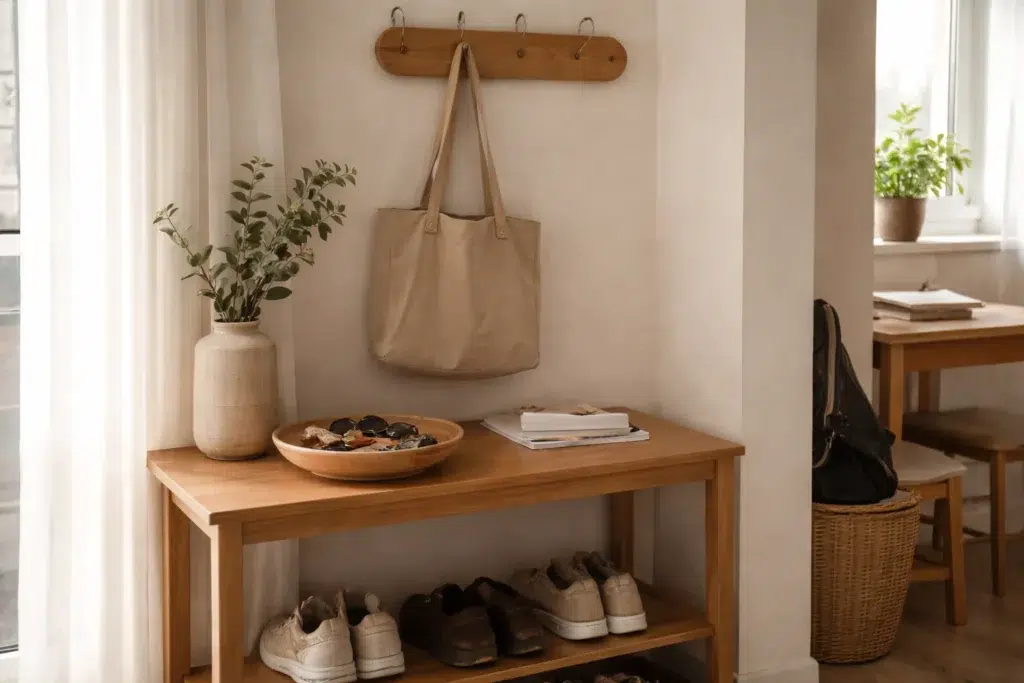
The first place clutter appears is often right by the door. Keys, bags, mail, and shoes land wherever there’s a free surface.
At the door, people are switching modes. Shoes come off, bags drop, keys land wherever there’s space — speed matters more than precision.
A small boundary helps here. Defining one clear landing spot — such as a shallow tray or bowl placed intentionally — is often enough to keep the rest of the entryway from filling up.
Kitchen Counters
Kitchen counters collect clutter even in tidy homes. They sit at the intersection of cooking, eating, and cleaning, which makes them natural landing zones.
Storage placement plays a role here. In storage ideas for small homes using what you already have, grouping items near where they’re used helps reduce counter buildup.
One quick improvement is to give non-food items a temporary zone. When those items have a defined place, counters stay usable without constant clearing.
Bedroom Chairs and Flat Surfaces
Chairs, benches, and dressers often become temporary storage for clothes that are worn but not ready for the hamper.
These surfaces collect items because they don’t require a decision. Clothes can land there without anyone having to commit to putting them away.
When a surface keeps filling up, it usually means the room needs an easier halfway option — not a stricter rule.
Living Room Side Tables

Side tables gather remote controls, books, cups, and chargers. The clutter here usually reflects how the space is actually used — relaxing, not organizing.
As explored in how to keep a small home organized without constant cleaning, these areas benefit from simple reset points rather than strict rules.
A side table that resets easily matters more than one that looks perfect during the day. If a space resets quickly, it stays usable longer without effort.
What These Messy Spots Are Telling You
Clutter-prone areas often reveal where a home needs better alignment between habits and layout. They’re signals, not failures.
Looking at where mess appears first often reveals the quickest improvements:
- Entryways need clear landing boundaries
- Kitchen counters need temporary zones, not constant clearing
- Bedroom surfaces need easier in-between options
- Living areas benefit from fast, repeatable reset points
Once these patterns become visible, organization stops feeling like a full reset. Small adjustments in the right places often do more than reorganizing everything.
Final Thoughts
In small homes, organization doesn’t break down everywhere at once. It breaks down in predictable places. Noticing those spots is usually enough.
Author & Editorial Review
Author: Perla Irish — design writer covering interior styling, lighting behavior, and practical home organization, with hands-on experience addressing small-space living challenges.
Editorial Review: This article was reviewed by the Living Bits & Things editorial team to ensure clarity, accuracy, and alignment with our internal quality and helpful-content standards. Learn more about our editorial review process.
Published: January 2026 · Last updated: January 2026
Leave a Reply