
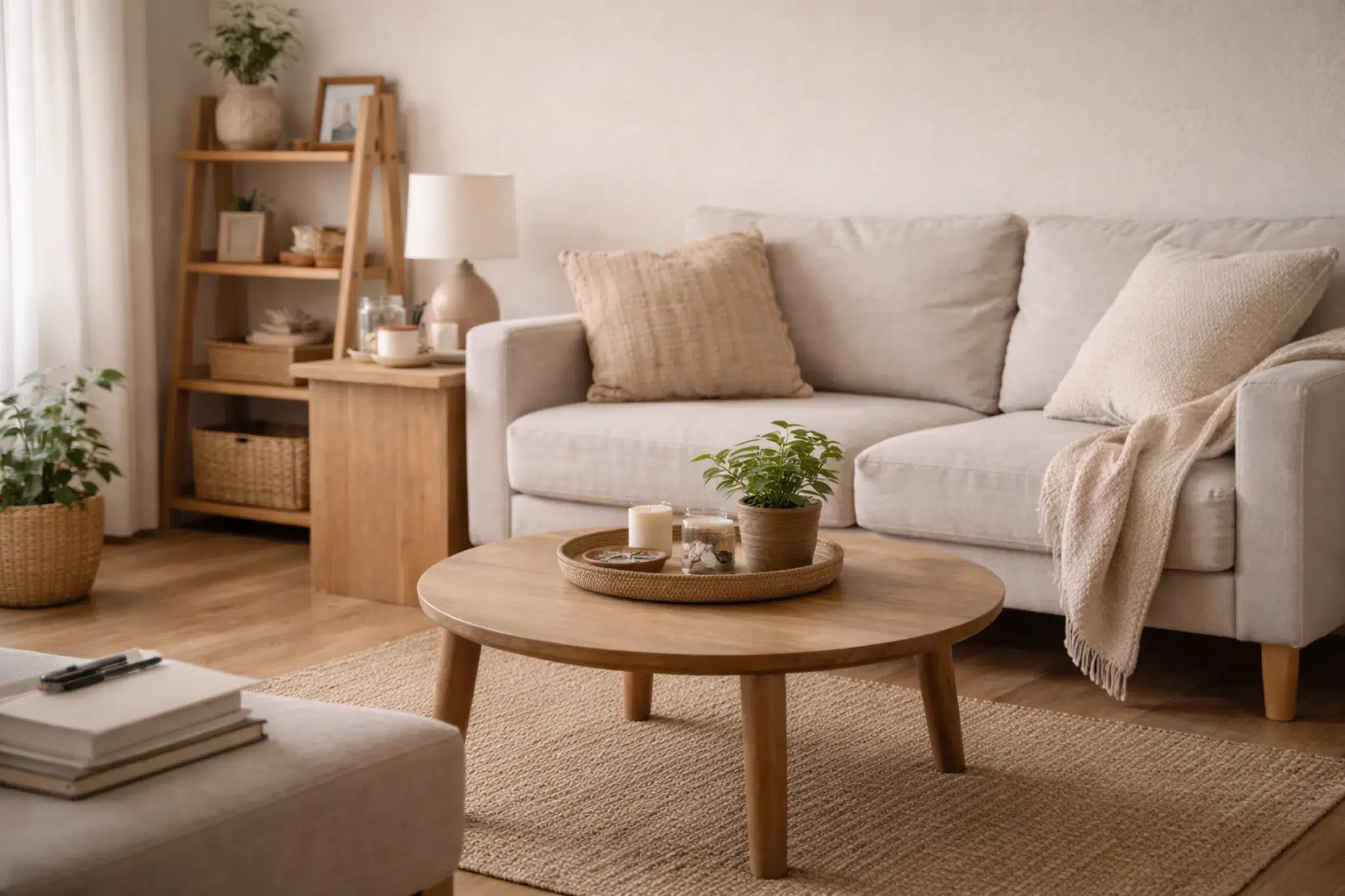
Keeping a small home organized often feels harder than organizing it in the first place. Even after decluttering and setting up storage, things slowly drift back onto counters, chairs, and open surfaces.
The problem usually isn’t laziness or lack of discipline. In most cases, it’s that daily routines slowly undo even the best organization systems. In small homes, there’s less room for friction, so small habits show up faster.
Why Small Homes Get Messy So Quickly
Small spaces don’t hide mess well. When something doesn’t have a clear place, it gets set down temporarily and forgotten. Those short pauses quickly become part of the room.
This is why organizing once rarely solves the problem. As discussed in how to organize a small apartment without buying furniture, organization works best when it supports habits instead of trying to replace them.
Focus on Reset Points, Not Deep Cleaning
Instead of thinking in terms of constant cleaning, it helps to identify reset points — moments when a space naturally returns to neutral.
A reset point works when it’s tied to an existing routine, not added as a new task. It’s usually a moment that already happens every day — before bed, after a meal, or when leaving the house.
Effective reset points share three traits: they’re quick, they happen at the same time each day, and they return the space to a neutral state rather than making it “perfect.”
For example, clearing the kitchen counter at the end of the day or resetting the living room before bed often does more than occasional deep cleaning sessions.
In one small apartment, simply resetting the coffee table and couch area each night prevented clutter from spreading into the rest of the room. No extra storage was added — just a consistent reset point.
Reduce the Number of Surfaces That Collect Stuff

Open surfaces invite clutter. In small homes, the more flat areas there are, the more places objects can land.
Reducing how many surfaces are “active” doesn’t require removing furniture. It simply means deciding which surfaces are meant to hold everyday items — and which ones aren’t.
In practice, this can be as simple as limiting a coffee table to a single tray, using a vertical stand on a dresser instead of spreading items flat, or keeping one surface completely clear as a visual reset zone.
Store Items Close to Where You Use Them
Items that live far from where they’re used rarely make it back to storage. Keeping things nearby reduces friction and lowers the chance that clutter builds up.
This idea connects directly to storage choices. In storage ideas for small homes using what you already have, grouping items by use — not by category — helps spaces stay organized longer.
Make Organization Easy to Undo and Redo
Rigid systems break down quickly. In small homes, organization lasts longer when it’s flexible.
Open baskets, trays, or loose groupings make it easier to reset a space quickly. If something takes too long to put away, it usually won’t happen.
If organization systems keep breaking down over time, the issue is rarely effort. This look at why organization systems fail in small homes explains how decision fatigue quietly undermines even well-planned setups.
A Simple Daily Reset That Actually Works
Many people find that a short daily reset is enough to keep small homes feeling under control.
This approach reflects patterns the author has observed across multiple small apartments, where consistency mattered more than the complexity of the system.
- Return obvious items to their usual places
- Clear one main surface per room
- Move out-of-place items into a single basket to sort later
This prevents clutter from spreading without turning organization into a full chore.
Final Thoughts
In small homes, staying organized is less about cleaning and more about reducing friction. When storage, habits, and daily routines work together, spaces stay manageable without constant effort.
Author & Editorial Review
Author: Perla Irish — design writer covering interior styling, lighting behavior, and practical home organization, with hands-on experience addressing small-space living challenges. Her work focuses on how real homes function day to day, especially where space is limited.
Editorial Review: This article was reviewed by the Living Bits & Things editorial team to ensure clarity, accuracy, and alignment with our internal quality and helpful-content standards. Learn more about our editorial review process.
Published: January 2026 · Last updated: January 2026
Leave a Reply