
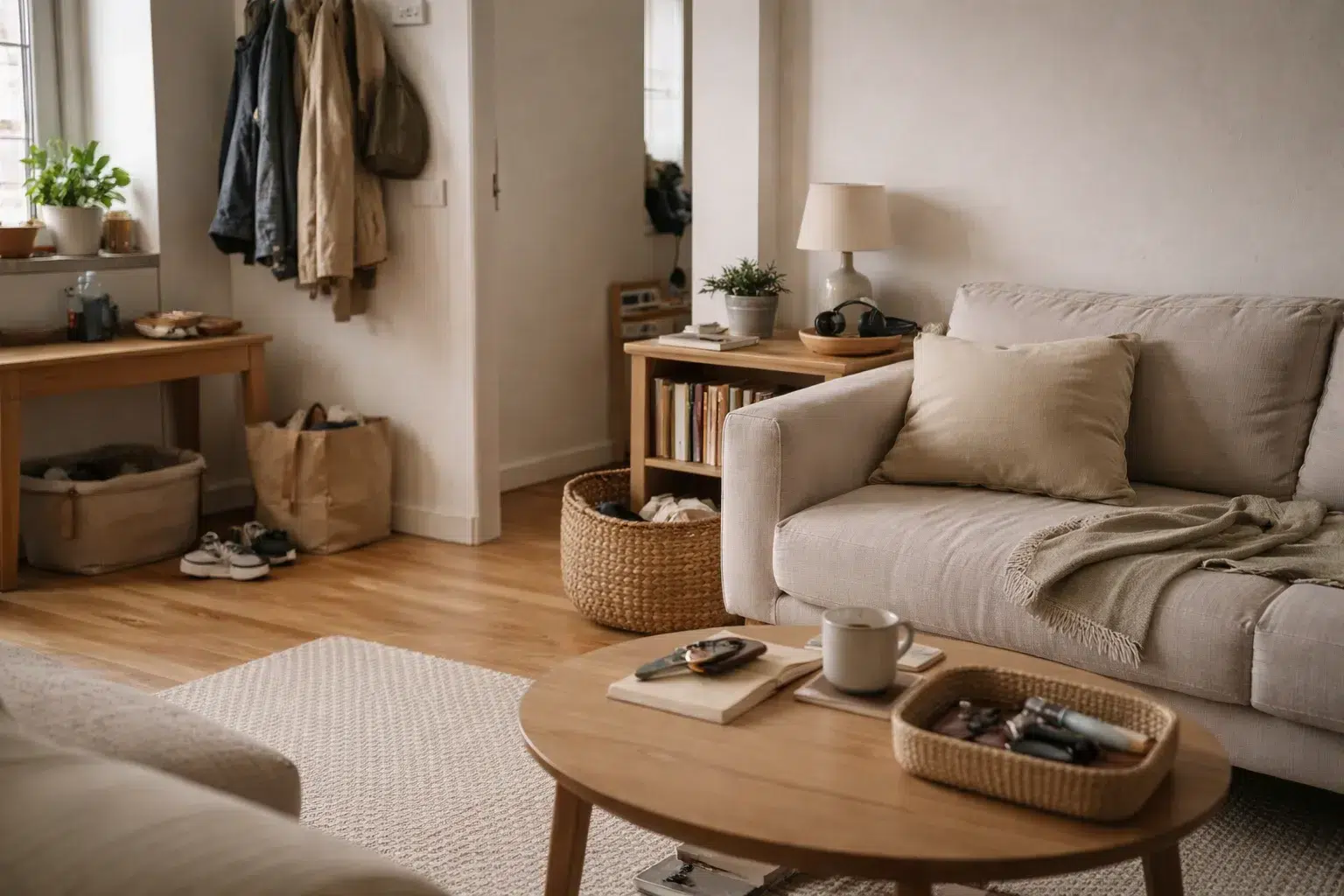
Many organization systems are designed to look calm when nothing is happening. Surfaces stay clear, drawers line up, and everything appears settled.
Small homes, however, are rarely static. They’re used constantly, often by the same people repeating the same routines day after day.
When Organization Is Built for Looks
Organizing for appearance prioritizes visual order. Items are hidden, categories are precise, and open surfaces are treated as something to protect.
This approach works well in moments of pause — during a showing, a photo, or a quiet evening. It struggles once daily life speeds up.
In small homes, systems built mainly for appearance often fail not because they’re wrong, but because they assume slower, more deliberate behavior than real life allows.
What Organizing for Use Actually Means
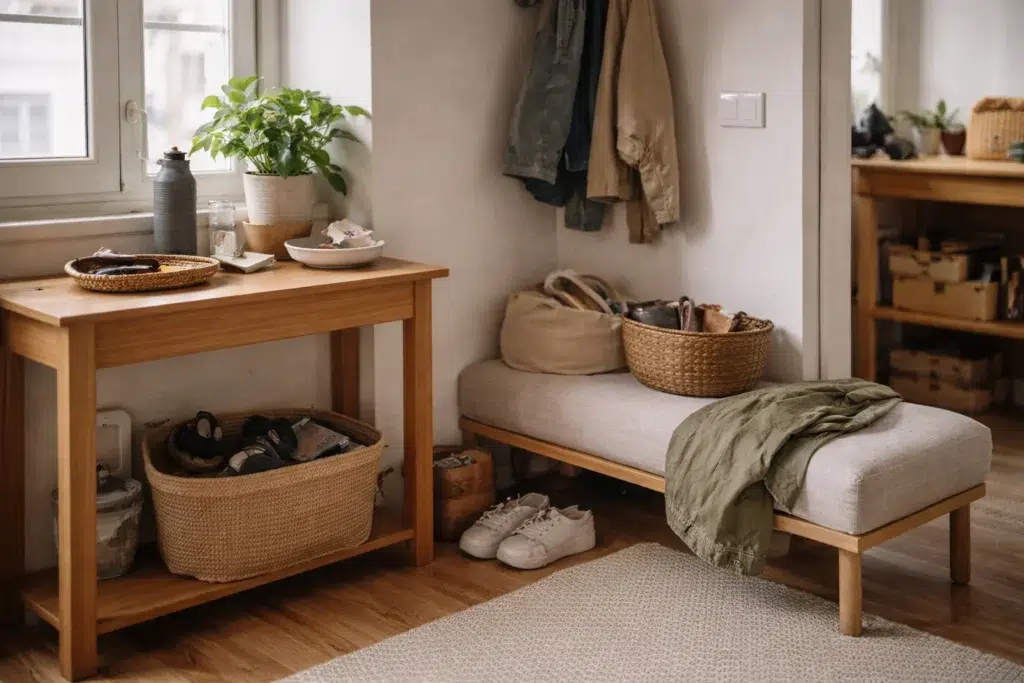
Organizing for use prioritizes speed, access, and minimal thinking. Items are stored close to where they’re needed, even if that storage remains visible.
A bag placed near the door, a shallow tray on a table, or an open basket by a chair may not look perfect, but they reduce friction in moments when decisions feel costly.
In small homes, this tradeoff often determines whether a system gets used at all.
Why the Tension Is Stronger in Small Homes
As explored in why organization systems fail in small homes, systems that require repeated decisions tend to break down quickly.
Organizing for appearance usually adds decisions. Organizing for use removes them.
When space is limited, even small delays — opening a lid, remembering a category, returning an item precisely — can be enough to derail a system.
Where Appearance Often Wins—and Causes Friction
In many small homes, tension shows up on entry surfaces, kitchen counters, and bedroom chairs. These areas are expected to look tidy, yet they support fast-moving routines.
As discussed in where small homes get messy first, clutter in these spots isn’t accidental. It’s a sign that appearance is being asked to do the work of function.
Finding Balance Without Giving Up Either
Most small homes don’t benefit from choosing one approach exclusively. Systems that last tend to combine visual calm with practical forgiveness.
Organizing around existing habits, as outlined in how to organize a small apartment without buying new furniture, allows appearance to follow use rather than compete with it.
Final Thoughts
In small homes, organization works best when daily use comes first. Appearance can still matter — but it can’t lead. This broader reflection on what organization is really for places that balance in a wider context.
Author & Editorial Review
- Author: Perla Irish — design writer covering interior styling, lighting behavior, and practical home organization, with hands-on experience addressing small-space living challenges.
- Editorial Review: This article was reviewed by the Living Bits & Things editorial team to ensure clarity, accuracy, and alignment with our internal quality and helpful-content standards. Learn more about our editorial review process.
Published: January 2026 · Last updated: January 2026
Leave a Reply