
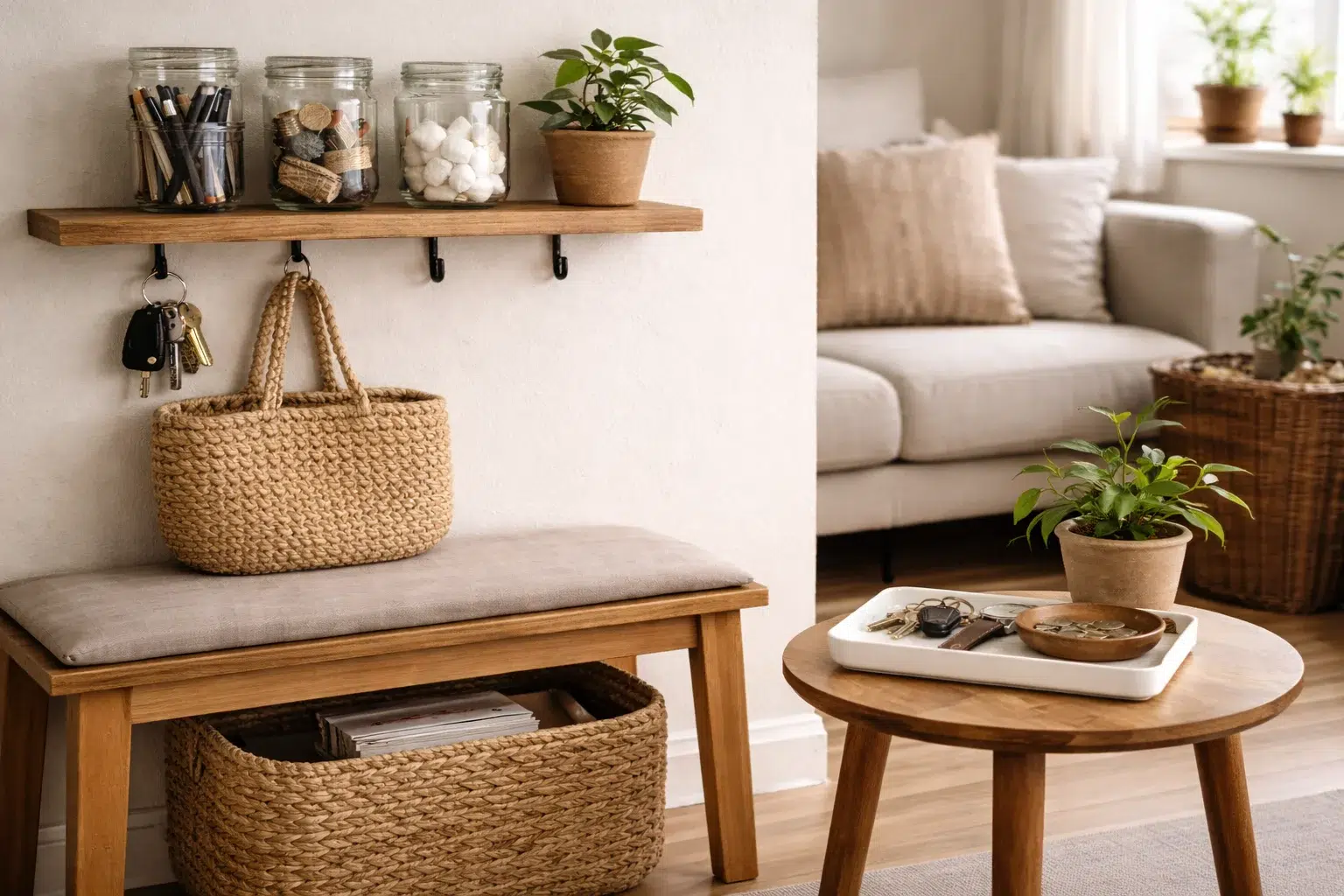
In small homes, storage often feels like a constant compromise. Even when you don’t own much, limited space makes everyday items stand out. Drawers fill up faster than expected, surfaces collect random objects, and clutter returns to the same spots.
What’s easy to miss is that storage problems aren’t always caused by a lack of containers or furniture. In many homes, the issue is how existing items are grouped, placed, or reused.
Small adjustments — using what’s already there — work better than buying something new. In practice, this often means reusing boxes as dividers, storing items vertically instead of stacking them, and grouping everyday objects so they don’t spread across surfaces.
Why Storage Feels Harder in Small Homes
Limited space exposes habits. When there’s no clear place for something, it gets set down temporarily and forgotten. Those small decisions pile up and start to feel like a storage problem.
Another issue is treating storage as a single solution. What works in a kitchen rarely works the same way in a bedroom or bathroom. Storage lasts longer when it follows how each space is actually used.
This connects closely to daily routines. As discussed in how to organize a small apartment without buying furniture, storage systems are easier to maintain when they support habits instead of fighting them.
Simple Storage Ideas Using What You Already Have
Look for Containers That Are Underused
Most homes already have boxes, baskets, or containers that aren’t doing much. Shoe boxes, gift boxes, or storage bins often end up holding unrelated items without a clear purpose.
Using these containers intentionally — as drawer dividers or shelf organizers — creates structure without adding anything new. The difference comes from giving each container a specific role.
Use Vertical Space Before Adding More Storage
Vertical space is easy to overlook in small homes. Walls, cabinet doors, and the space above shelves can take pressure off drawers and countertops.
Storing items upright instead of stacked, hanging tools or accessories, or grouping items vertically keeps storage accessible without changing the room’s layout.
Turn Everyday Items into Storage Tools
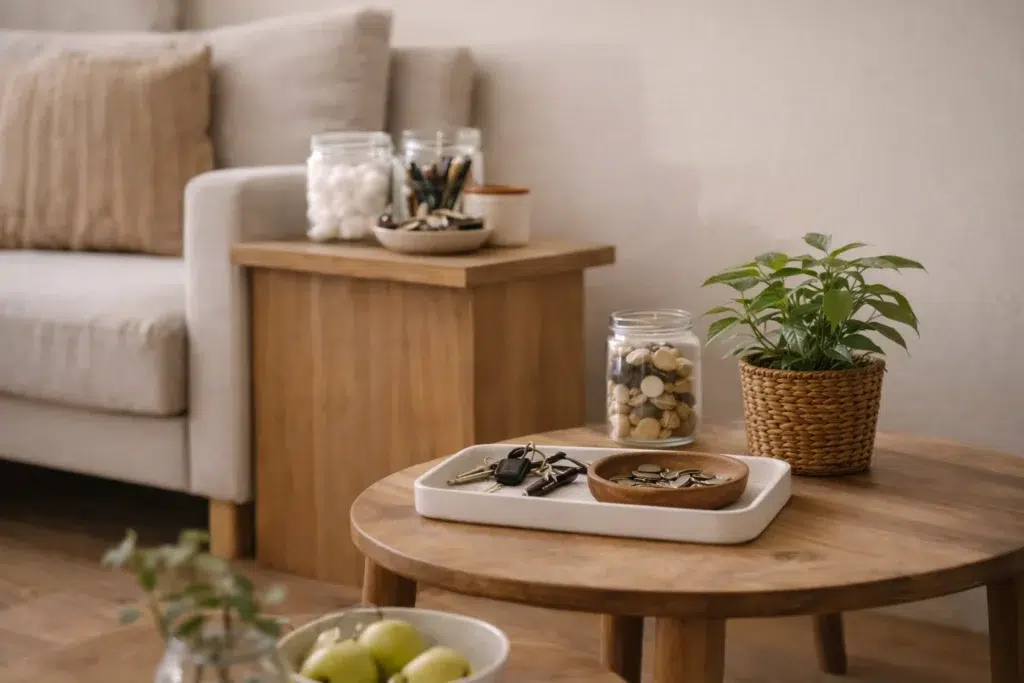
Not every storage solution needs to look like storage at all. Items already in use often work just as well.
- Glass jars for pens, chargers, or bathroom items
- Shallow bowls for keys or loose everyday objects
- Trays to keep frequently used items from spreading across surfaces
These small groupings limit visual clutter without changing how the room feels.
Room-by-Room Storage Ideas
In a Small Kitchen
Kitchens feel crowded when items are scattered across multiple areas. Keeping frequently used items closer together simplifies daily tasks.
Jars for dry goods, a single container for spices, or storing utensils near where meals are eaten can improve flow without adding cabinets or shelves.
In a Bedroom or Closet
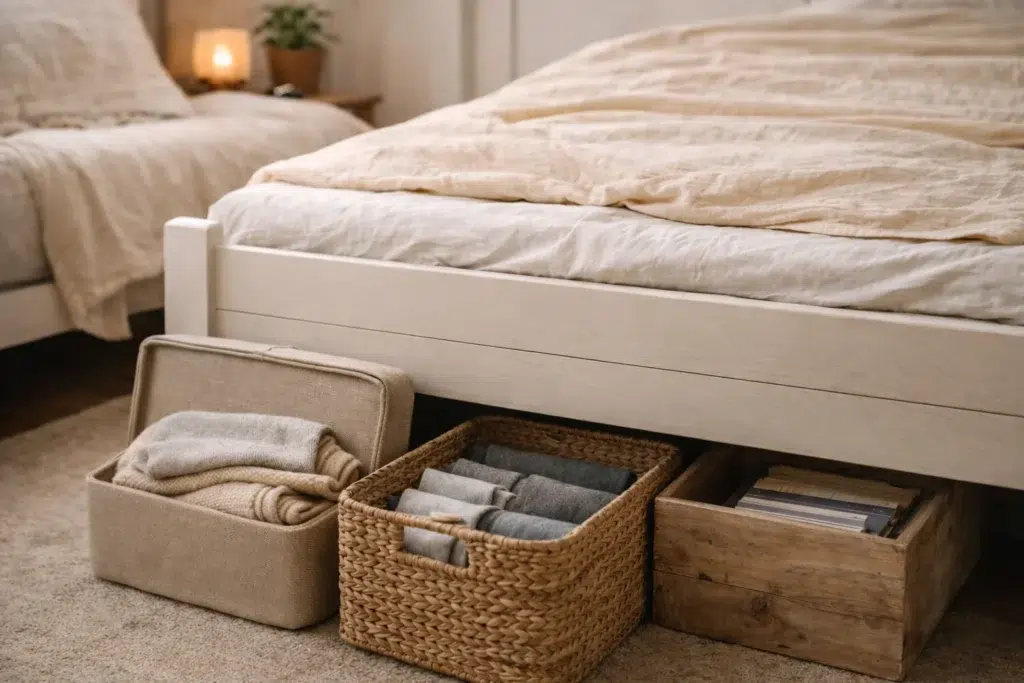
Bedrooms feel calmer with storage that reduces visual noise. Boxes or baskets used as drawer dividers help keep clothing and accessories contained.
Some people keep one basket for items that don’t have a permanent home yet. When it’s emptied regularly, it stops clutter from spreading.
In a Bathroom
Bathrooms have limited storage but plenty of small items. Jars, hooks, and compact containers organize toiletries without crowding the sink.
Using vertical space inside cabinets or on walls frees up counters and makes the room easier to manage.
Common Storage Mistakes in Small Homes
These mistakes usually come from good intentions. In small homes, they often make storage harder to maintain instead of easier.
- Buying storage before understanding what needs organizing
- Using containers without clear categories
- Storing items far from where they’re used
- Overfilling drawers and shelves
- Treating storage as a one-time fix
A Simple Way to Test Any Storage Idea
- Use an existing container or surface
- Try the setup for a few days
- Notice whether it feels easier or harder to maintain
- Adjust placement or grouping if needed
If something doesn’t work after a short trial, it’s better to change it than force it. Storage should reduce friction, not add to it. Once a storage setup works, the next challenge is keeping it consistent. This guide to staying organized without constant cleaning looks at how small habits and simple reset points help organization last.
If storage keeps breaking down in the same areas, the issue is often location rather than containers. This look at where small homes get messy first explains why certain spots fail repeatedly.
Final Thoughts
Storage works best when it follows how the space is actually used.
In small homes, storage doesn’t need to be perfect to be effective. It just needs to make daily routines easier. Paying attention to where things naturally end up often reveals simpler solutions — without adding anything new.
If you’re organizing a small space, you may also find this helpful: how to organize a small apartment without buying furniture.
Author & Editorial Review
- Author: Perla Irish — design writer covering interior styling, lighting behavior, and practical home organization, with hands-on experience addressing small-space living challenges.
- Editorial Review: This article was reviewed by the Living Bits & Things editorial team to ensure clarity, accuracy, and alignment with our internal quality and helpful-content standards. Learn more about our editorial review process.
Published: January 2026 · Last updated: January 2026
Leave a Reply