
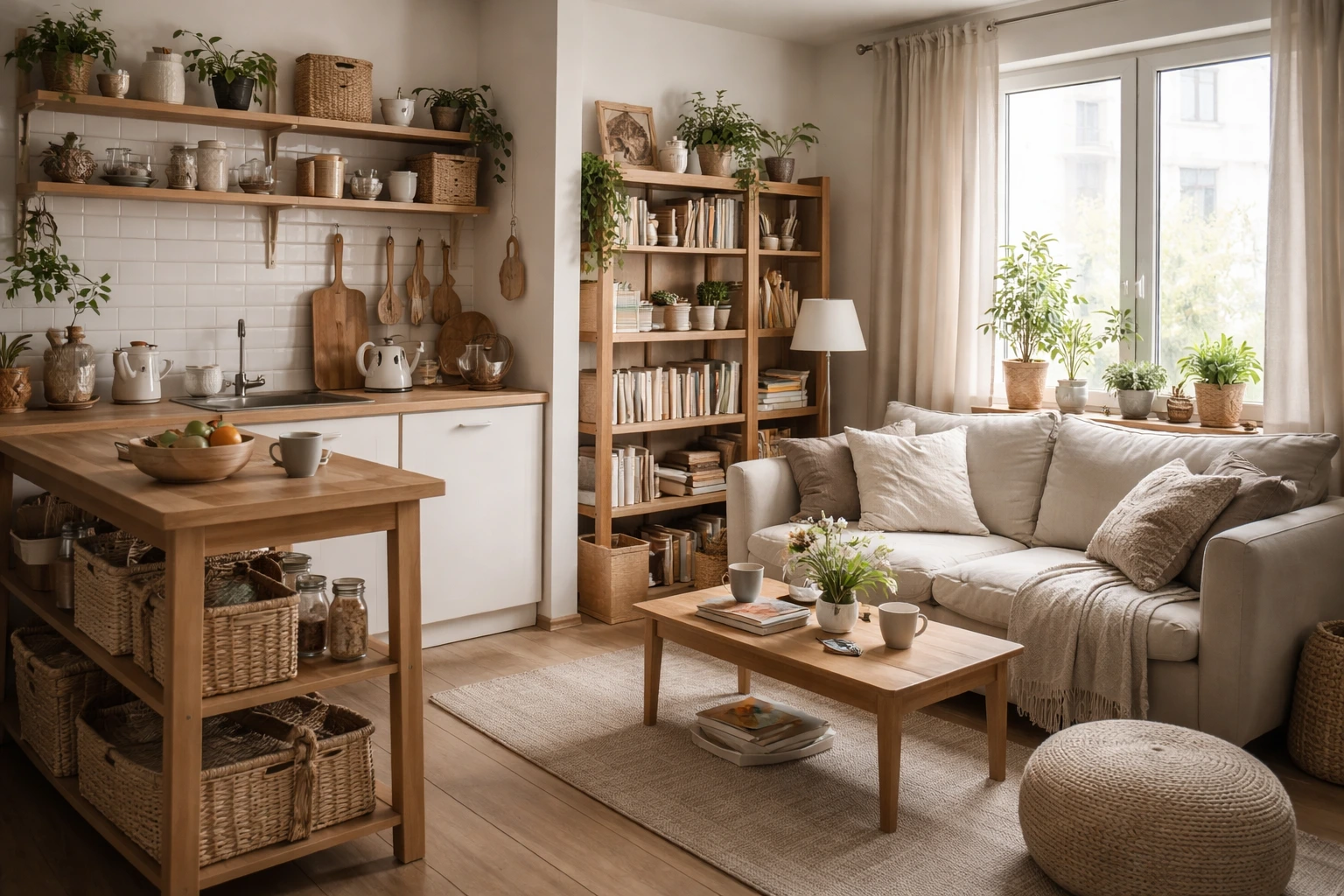
A space can feel overwhelming without being truly messy. Surfaces may be clear, floors unobstructed, and storage technically “organized”—yet the room still feels busy, heavy, or hard to relax in.
This is where visual clutter comes in. It’s less about how much a space holds and more about what the eye is asked to process. Repetition, contrast, exposed storage, and broken sightlines all contribute to whether a room feels calm or mentally noisy.
This guide looks at visual clutter as a design problem rather than a cleaning one. Instead of defaulting to hiding everything behind doors, it explores when open storage works, when soft boundaries help, and how subtle changes in layout, material, and light can reduce visual strain—without stripping a space of character or function.
What Visual Clutter Really Is (and What It Isn’t)
Visual clutter is often mistaken for a lack of organization. In reality, many visually cluttered spaces are technically tidy. Drawers are sorted, surfaces are clean, and storage exists—but the room still feels unsettled.
The difference lies in how the eye experiences the space. Visual clutter is created when there is too much information competing for attention at once, even if each individual item is useful or well cared for.
Common contributors to visual clutter include:
- High contrast between objects, finishes, or colors.
- Exposed storage where many items are visible at the same time.
- Repetition of small elements rather than fewer, larger groupings.
- Interrupted sightlines that prevent the eye from resting.
What visual clutter is not is simply “having too much.” A room filled with objects can still feel calm if those objects share a visual language, follow a rhythm, or are framed in a way that makes them easier to read as a whole.
This distinction matters because it shifts the solution away from constant decluttering and toward more sustainable design choices. Reducing visual clutter often means adjusting how items are presented, grouped, or filtered—rather than removing them entirely.
Why Open Storage Creates Visual Noise
Open storage is often recommended as a way to make small spaces feel lighter and more accessible. In practice, it can just as easily introduce visual noise—especially when it’s used without clear boundaries or intent.
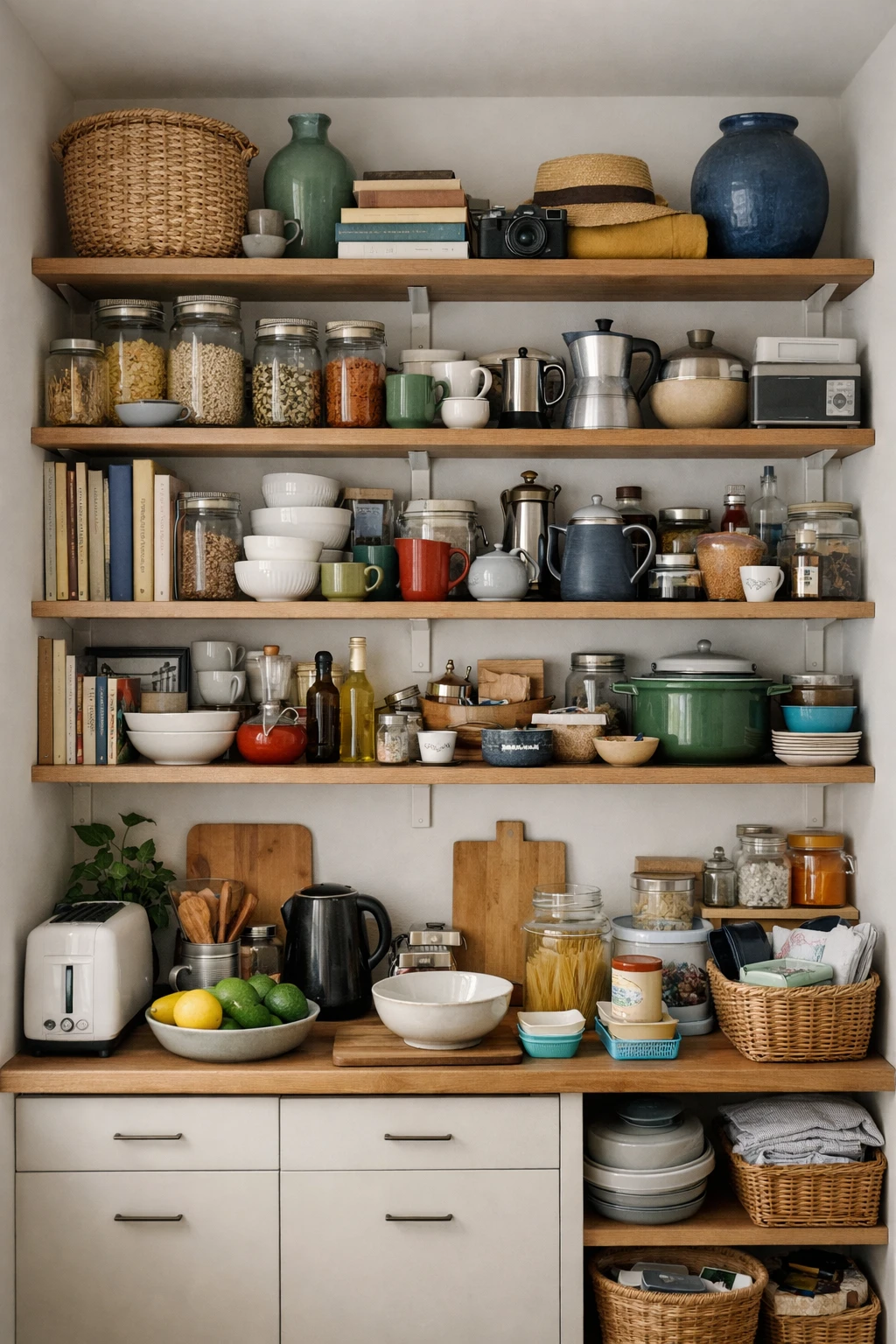
The issue isn’t that items are visible. It’s that open storage exposes many different shapes, colors, and scales at once, asking the eye to process each one individually. When this happens across multiple surfaces, the room can feel busy even if nothing is out of place.
Open storage tends to create visual noise when:
- Items vary widely in color, material, or size.
- Shelves are filled edge to edge without negative space.
- Background walls provide little contrast or visual framing.
- Storage is placed directly within major sightlines.
This is why open shelving often works best in controlled doses. A single shelving unit can read as intentional, while multiple open surfaces competing for attention can fragment the space.
Design choices such as adding backing panels, limiting what’s displayed, or using open storage as a partial divider rather than a full wall can reduce this effect. In these cases, shelving becomes a visual filter instead of a source of constant stimulation.
Understanding this trade-off helps explain why some rooms feel calmer after introducing soft boundaries—screens, curtains, or even furniture placement—rather than adding more storage. The goal isn’t to hide everything, but to decide what deserves to stay in view.
Soft Boundaries That Calm the Eye
When visual clutter comes from too much being visible at once, soft boundaries can help by gently filtering what the eye takes in. Unlike cabinets or walls, these elements don’t fully conceal a space—they soften transitions and reduce visual intensity.
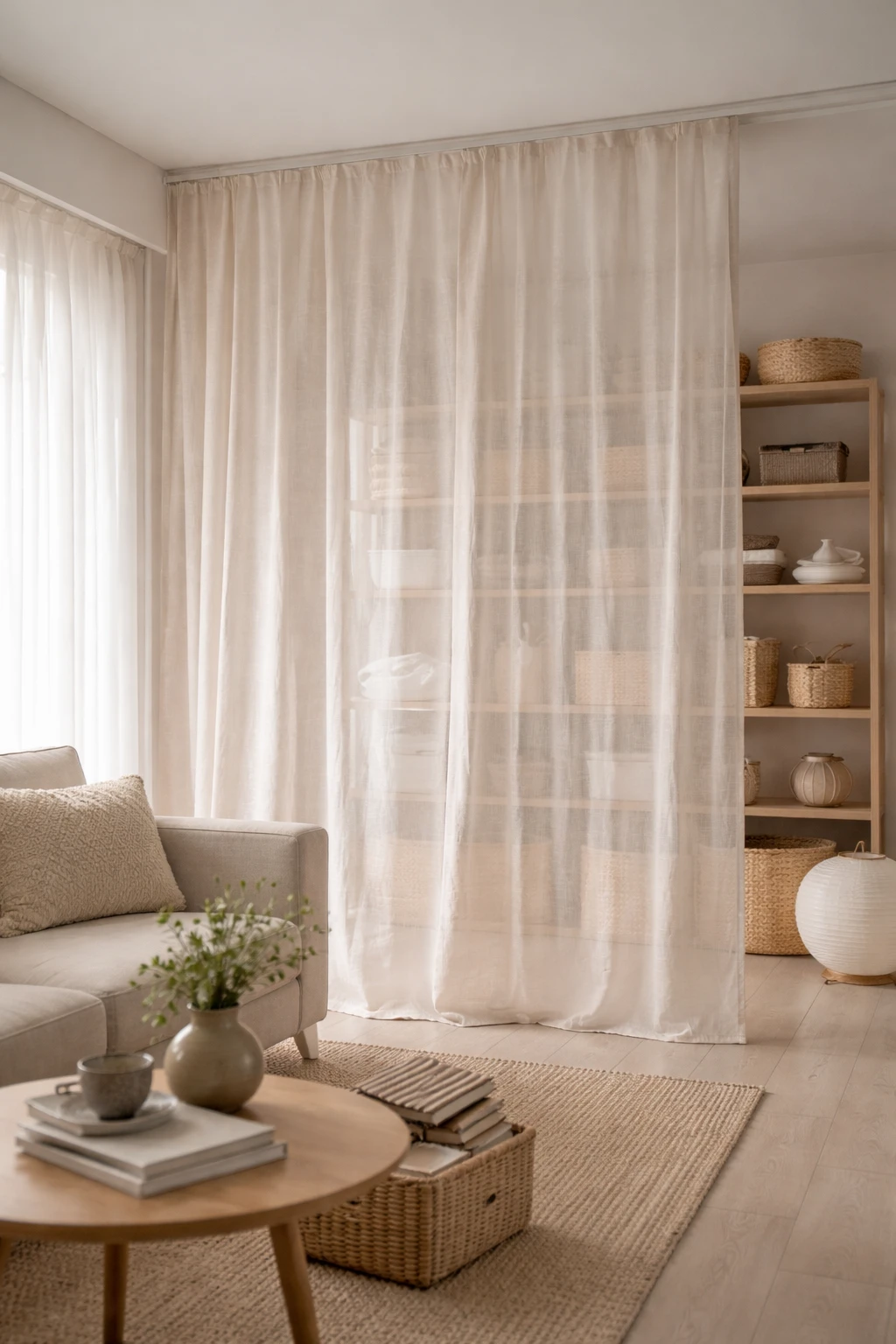
Textiles play a central role here. Fabric absorbs light, reduces contrast, and introduces continuity in a way hard surfaces often can’t. This is why curtains, screens, and upholstered elements frequently feel calming even in visually busy rooms.
Common examples of soft boundaries include:
- Fabric folding screens that partially obscure storage or secondary areas.
- Curtains or panels that can be drawn or opened as needed.
- Sheer materials that maintain light while reducing visual detail.
- Furniture with upholstered backs positioned to define zones.
These solutions work best when flexibility matters. Because they can be moved, folded, or removed, they allow a room to adapt without locking it into a single visual arrangement.
Soft boundaries are especially effective when used alongside open storage. Instead of eliminating shelves altogether, they provide moments of rest—areas where the eye can pause before encountering the next cluster of objects.
In this context, elements like folding screens are less about division and more about pacing. They help a space feel intentional without demanding that everything be hidden or permanently enclosed.
When “Hidden Storage” Backfires
Hiding everything is often presented as the cure for visual clutter. Closed cabinets, solid doors, and deep storage can certainly reduce what’s visible—but they can also introduce a different set of problems when used without restraint.
- Overusing closed storage can make a space feel heavier than expected. Large, uninterrupted surfaces absorb attention in their own way, especially when they dominate sightlines or limit how light moves through a room.
- Deep or inaccessible storage is another common issue. When items are hidden too effectively, they become harder to reach, easier to forget, and more likely to accumulate. What starts as visual calm can quietly turn into functional friction.
- Mental clutter is often the side effect. When storage systems require constant remembering—what’s behind which door, or stacked where—the space may look tidy but feel mentally demanding to use.
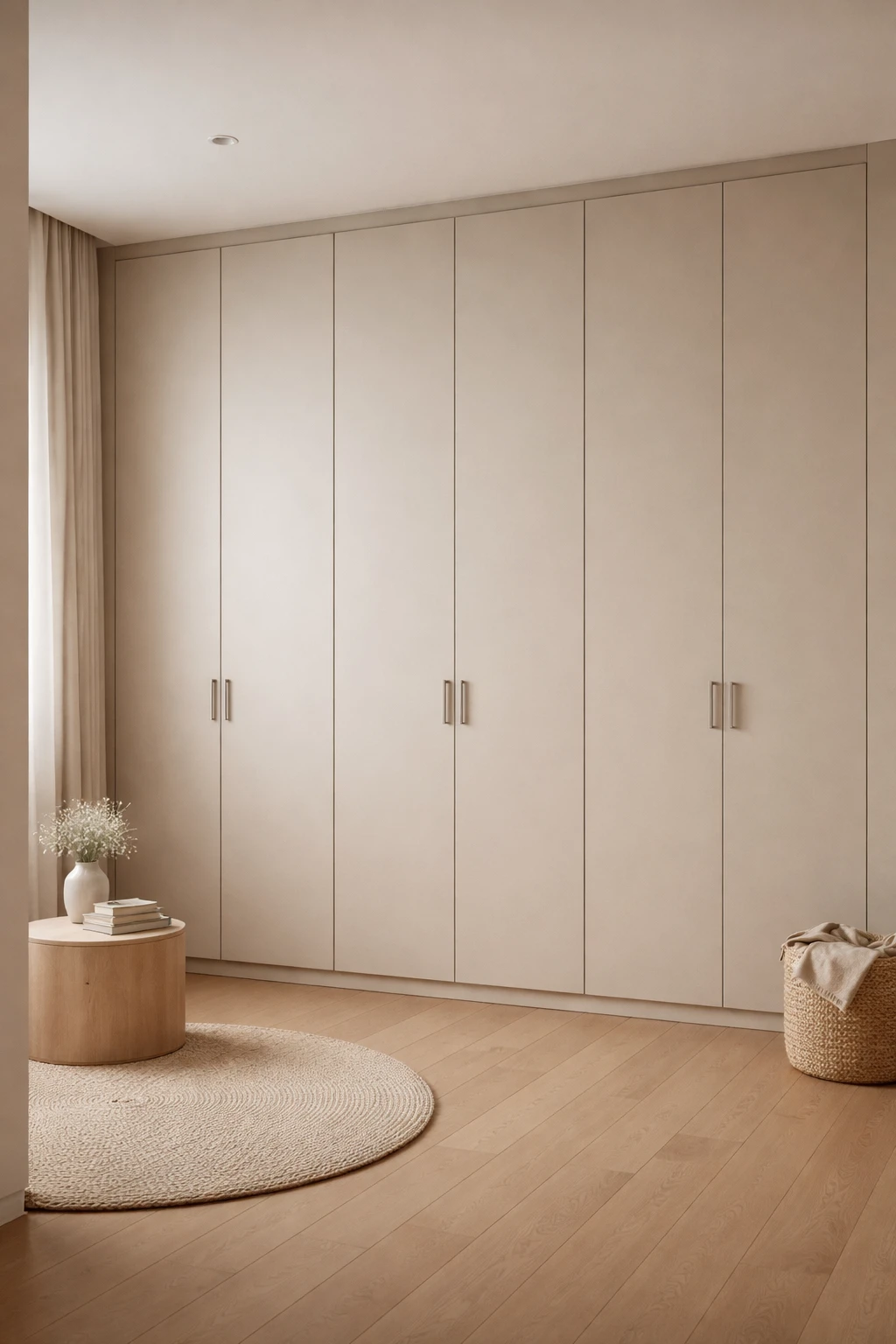
This doesn’t mean closed storage is a mistake. It works best when paired with intention: limiting depth, reserving it for less frequently used items, and balancing it with areas where everyday objects remain visible and accessible.
Visual calm is most sustainable when it aligns with how a space is actually used. Storage that looks good but resists daily habits often creates more strain than it removes.
Reducing Visual Clutter Without Buying Anything
Reducing visual clutter doesn’t always require new storage or furniture. In many spaces, the biggest gains come from changing how existing elements relate to each other—what’s grouped, what’s repeated, and where the eye is allowed to rest.
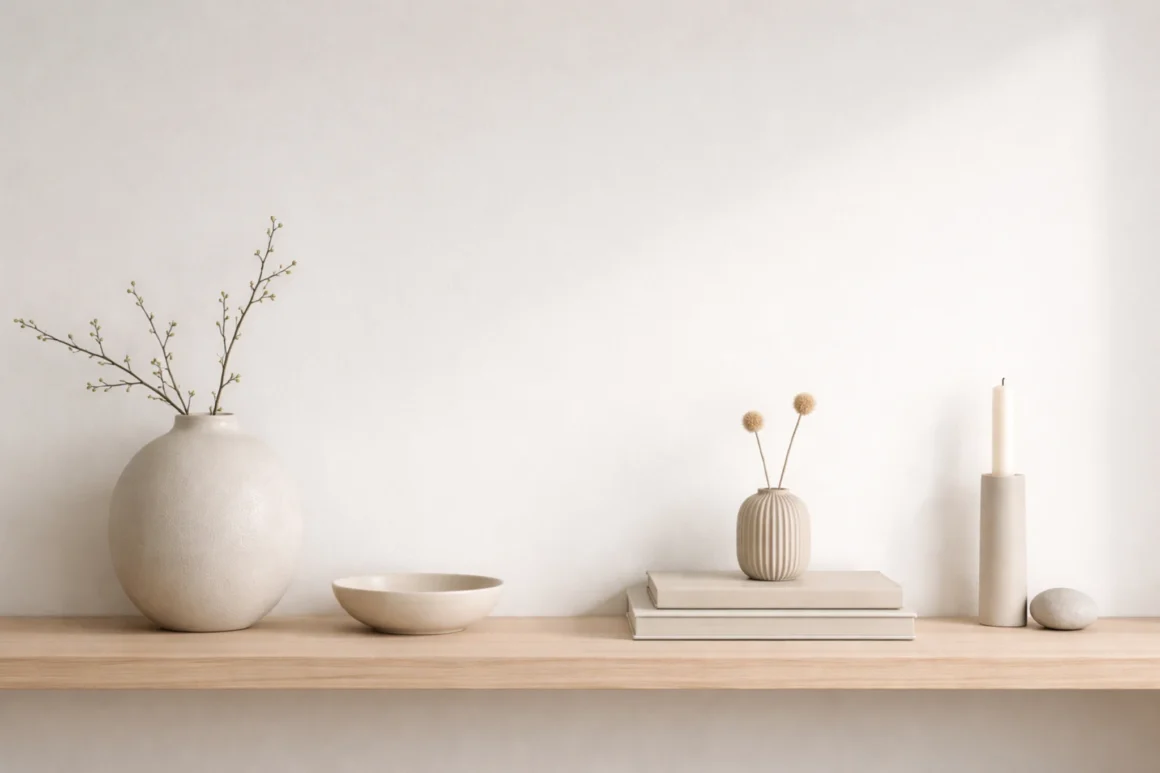
- Grouping is one of the simplest adjustments. When items are clustered into fewer, clearer groupings, they register as a single visual unit rather than many competing elements. This often means fewer zones, not fewer objects.
- Consistency matters more than minimalism. Repeating finishes, materials, or colors helps the eye move through a space without stopping at every detail. A room can hold many items and still feel calm if they share a visual language.
- Negative space is not wasted space. Leaving intentional gaps—on shelves, walls, or surfaces—gives the eye places to pause. Without these pauses, even well-organized rooms can feel visually exhausting.
- Lighting and shadow also play a quiet role. Softer, layered lighting reduces harsh contrast and helps visually merge surfaces that might otherwise feel fragmented. Often, adjusting light placement does more for visual calm than rearranging objects.
These changes work because they address perception rather than accumulation. When the eye is guided more gently through a space, clutter feels reduced—even when nothing has been removed.
Choosing Between Open, Closed, or Soft Solutions
Choosing how to manage visual clutter isn’t about committing to one type of solution everywhere. Most homes benefit from a mix of open, closed, and soft elements—each used where it makes the most sense.
Before deciding, it helps to think less about aesthetics and more about daily use:
- How often is this area used? Items used daily tend to work better in open or lightly filtered storage.
- Is this within a primary sightline? The more visible the area, the more important visual calm becomes.
- Does flexibility matter? Spaces that change function benefit from solutions that can move or soften over time.
- Is access more important than concealment? Hiding something well can sometimes make it harder to live with.
Open solutions work best for a limited number of items that share a clear visual language. They reward restraint and consistency.
Closed solutions are most effective when used selectively—for deeper storage, less frequently used items, or areas where visual simplicity is critical.
Soft solutions sit between the two. Screens, curtains, and upholstered elements reduce visual intensity without fully hiding what’s behind them, making them especially useful in flexible or shared spaces.
A balanced approach often creates the calmest result. When storage and boundaries reflect how a space is actually used, visual clutter becomes easier to manage—and less likely to return.
Calm Comes From Fewer Decisions, Not Fewer Objects
Visual calm rarely comes from owning less. This is often why spaces can look orderly yet still feel unresolved, as explored in why small homes rarely feel finished. More often, it comes from asking the eye to make fewer decisions at once—through clearer groupings, gentler transitions, and boundaries that filter rather than erase.
Open storage, closed cabinets, and soft boundaries all have a place. What matters is how intentionally they’re used, and whether they support daily habits instead of fighting them. When a space feels easier to read, it usually becomes easier to live in.
For situations where visual noise comes from overlapping uses within the same room, approaches like screens, curtains, or furniture placement can help pace what’s seen at once. This broader overview of room divider ideas for small and flexible spaces explores how different boundaries affect flow, light, and perception.
If you’re considering softer ways to filter a space without committing to permanent changes, this guide to building a fabric folding screen shows how a lightweight divider can create visual separation while remaining adaptable.
Ultimately, reducing visual clutter isn’t about hiding everything. It’s about shaping what’s visible so a space feels coherent, calm, and flexible enough to change along with you.
Author & Editorial Review
Written by Perla Irish
Perla Irish is a design writer covering interior materials, everyday home decisions, and real-world finish performance. Her work focuses on how design choices shape lived-in spaces—particularly where flexibility, visual clarity, and long-term usability matter.
Editorial Review: This article was reviewed by the LivingBitsAndThings editorial team to ensure clarity, accuracy, and real-world applicability. Our editorial standards emphasize honest limitations, thoughtful decision-making, and long-term relevance. Read more about our editorial review process.
Originally published: January 27, 2026 · Last updated: February 7, 2026
Leave a Reply