
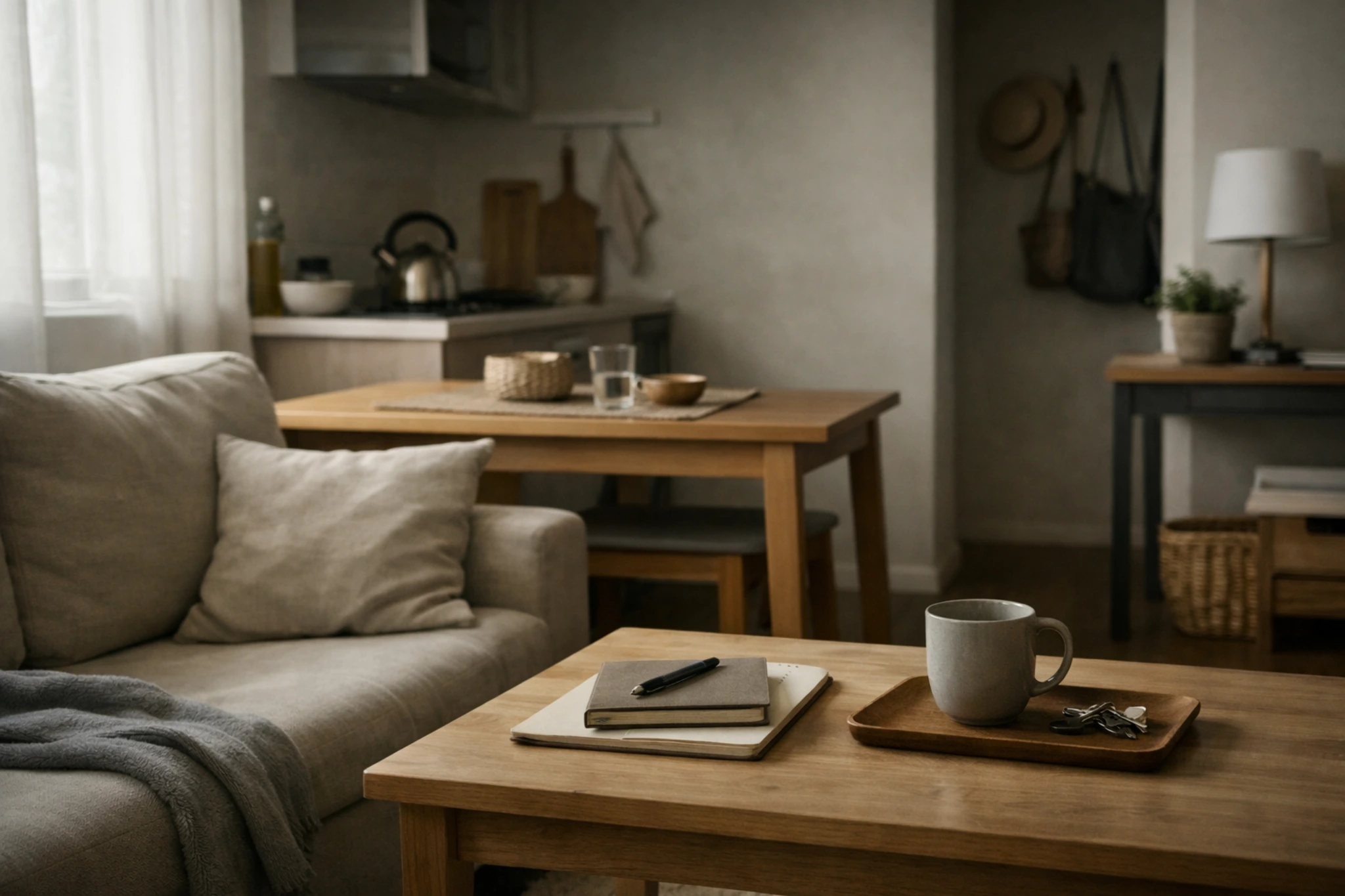
Organization is usually framed as a solution. More structure, clearer systems, better control.
But in small homes, there is a point where organization quietly stops reducing stress and begins creating it.
This shift rarely happens all at once. It builds slowly, through layers of systems that ask more of daily life than they give back.
The Hidden Cost of Constant Optimization
Each new organizational improvement adds rules. Each rule adds expectations. Over time, these expectations turn simple routines into sequences that require attention, memory, and precision.
In a small home, there is very little space to absorb that extra mental load. When organization becomes something that needs constant tuning, it stops feeling supportive and starts feeling performative.
The home may look calm, but using it begins to feel oddly demanding.
When Systems Start Policing Daily Life
At a certain point, organization systems can shift from guidance to enforcement. Items are expected to move in specific ways, at specific times, to specific places.
When those expectations are missed, the discomfort is subtle but persistent. It feels like falling behind, even when nothing is actually wrong.
This is often mistaken for a lack of discipline, when in reality the system itself has become too rigid for real use.
Why Small Homes Amplify This Pressure
As discussed in why organization systems fail in small homes, limited space magnifies friction. There is less room for delay, improvisation, or deviation.
In larger homes, small inefficiencies disappear into extra space. In small homes, they accumulate quickly and stay visible.
When organization demands constant correctness, small homes offer almost no buffer against that pressure.
Stress Often Appears Before Clutter

Organization-related stress does not always show up as mess. More often, it appears as hesitation.
People pause before setting something down. They avoid certain areas. They delay using parts of their space because doing so feels mentally heavier than it should.
These moments are signals that the system is serving its own rules rather than the people living with it.
Letting Structure Relax Without Losing Function
Reducing organizational stress does not require abandoning structure altogether. It requires deciding which rules genuinely support daily life and which ones exist only to preserve an image of order.
Organizing around existing habits, as explored in organizing a small apartment without buying new furniture, often restores ease by allowing systems to bend rather than break.
When organization adapts to how a space is actually used, tension fades without chaos taking its place.
Final Thoughts
In small homes, organization should make everyday life lighter. When it starts to feel like another responsibility to manage, that is not a personal failure.
It is often a sign that the system needs less control, not more.
Author & Editorial Review
- Author: Perla Irish — design writer covering interior styling, lighting behavior, and practical home organization, with hands-on experience addressing small-space living challenges.
- Editorial Review: This article was reviewed by the Living Bits & Things editorial team to ensure clarity, accuracy, and alignment with our internal quality and helpful-content standards. Learn more about our editorial review process.
Published: January 2026 · Last updated: January 2026
Leave a Reply