
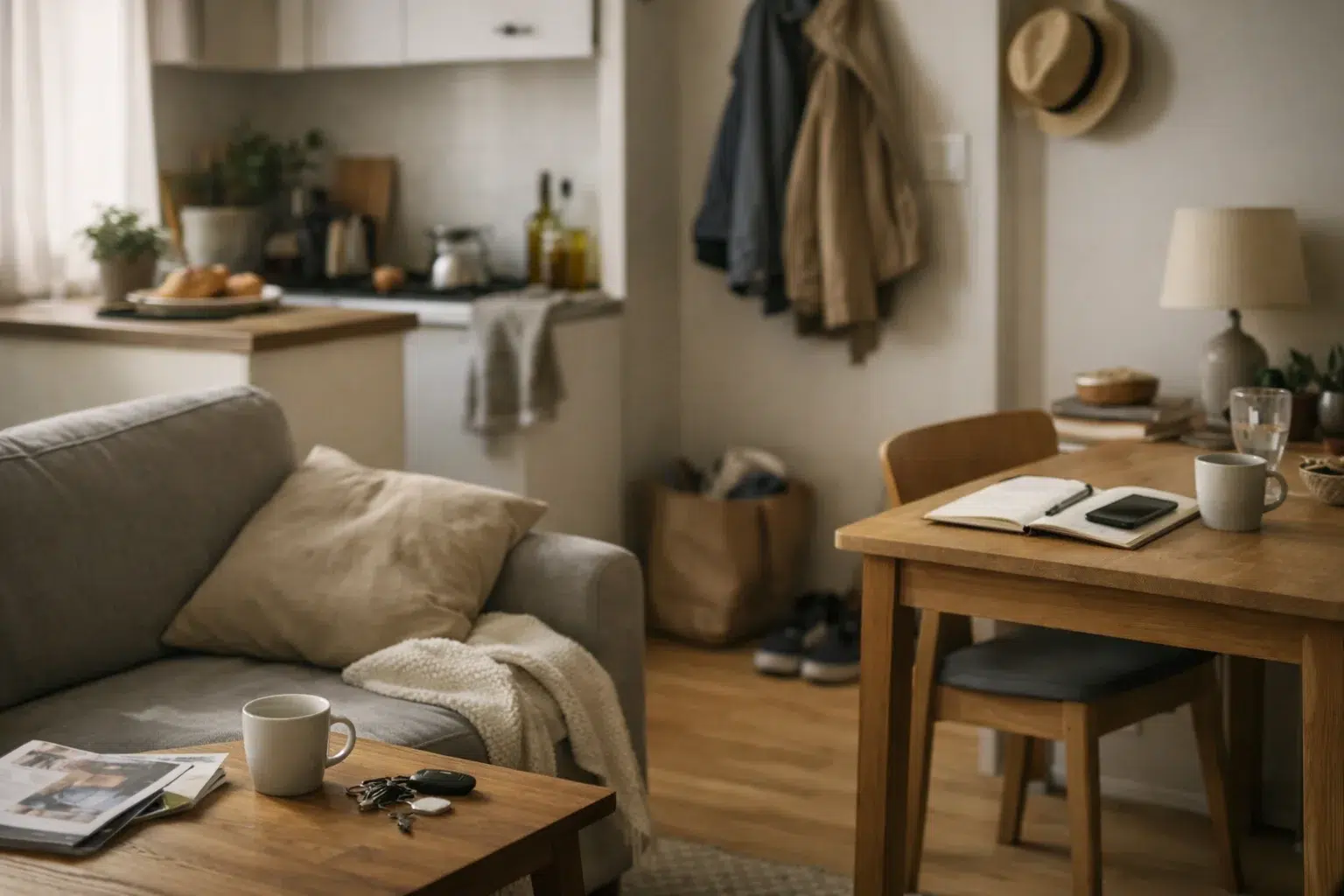
Many organization systems look perfect on paper. They’re logical, visually pleasing, and carefully planned.
In small homes, though, those systems often fall apart within weeks.
What breaks them isn’t discipline or motivation. It’s the number of decisions they quietly demand.
Too Many Small Decisions Add Up
In a small home, space is tight and routines move quickly. When a system requires deciding exactly where something belongs every single time, it creates friction.
At first, those decisions feel manageable. As they accumulate, they add mental weight. In behavioral psychology, this effect is often described as decision fatigue — the gradual exhaustion that comes from making too many small choices.
Eventually, items get set down wherever it’s fastest, and the system gets bypassed.
Why “Perfect” Systems Rarely Get Used
Many systems are designed for visual order rather than daily use. Lids need opening. Categories need remembering. Items need returning to exact positions.
A system that looks great at rest often struggles during busy moments.
In small homes, even minor delays matter. When a system slows someone down, especially at high-traffic moments, it quietly stops being used.
Small Homes Expose Friction Faster
As explored in where small homes get messy first, clutter shows up quickly in places where routines move faster than the setup supporting them.
These breakdown points aren’t failures. They’re signals that the system is asking for more effort than the moment allows.
What Works Better Than Rigid Systems
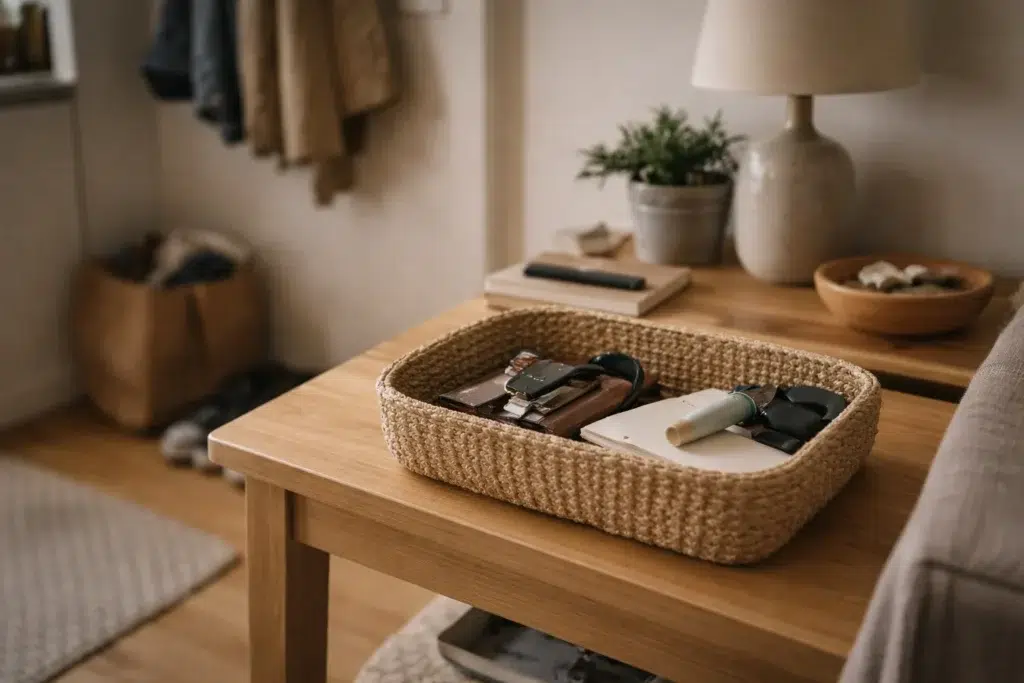
Systems that survive in small homes tend to be forgiving. They don’t rely on constant precision and don’t punish small lapses.
For example, instead of sorting daily items into multiple exact categories, a single flexible landing container often works better. It reduces decisions without sacrificing function.
Forgiving systems usually share a few traits:
- They are easy to undo and reset
- They tolerate imperfect use
- They reduce the number of decisions required
As discussed in how to keep a small home organized without constant cleaning, reset points lower the mental effort needed to stay organized day to day.
Designing for Fewer Decisions
The most durable systems remove choice wherever possible. When an item has one obvious place — or a flexible landing zone — it’s more likely to end up there.
This approach aligns with organizing around existing habits, rather than forcing new routines to stick.
In many small homes, whether a system lasts often depends on what it’s designed to prioritize. This comparison between organizing for daily use and organizing for appearance explains why systems built around use tend to hold up better over time.
Final Thoughts
In small homes, organization systems don’t fail because people stop caring. They fail because the systems demand too many decisions in moments where speed matters more.
When that kind of pressure builds, organization stops feeling practical and starts feeling personal. This reflection on when organization starts creating stress looks at what happens when systems no longer feel supportive.
The systems that last are usually the ones that ask the least.
Author & Editorial Review
- Author: Perla Irish — design writer covering interior styling, lighting behavior, and practical home organization, with hands-on experience addressing small-space living challenges.
- Editorial Review: This article was reviewed by the Living Bits & Things editorial team to ensure clarity, accuracy, and alignment with our internal quality and helpful-content standards. Learn more about our editorial review process.
Published: January 2026 · Last updated: January 2026
Leave a Reply