
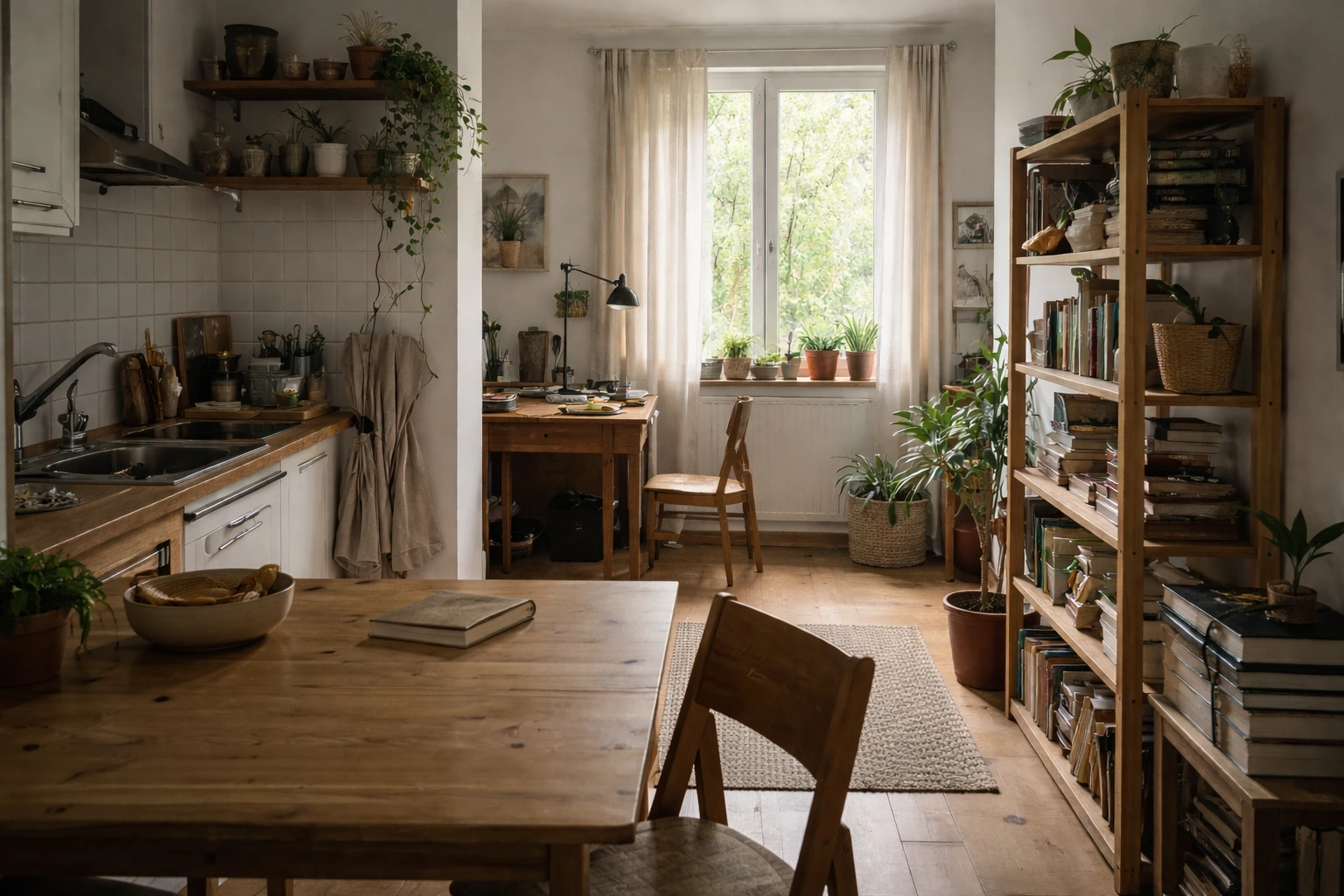
Some small homes are clean, but never quite calm.
The floors are clear. The counters are wiped. Nothing looks out of place. And still, the space feels like it’s holding its breath.
The sensation isn’t about mess. It’s about how much attention the room quietly asks for.
Clean Doesn’t Always Mean Quiet
In small homes, cleanliness removes dirt, but it doesn’t always reduce demand.
A stack of mail sits neatly aligned. A bag waits by the door for tomorrow. A device charges where it can be seen, not because it belongs there, but because it needs to be remembered.
Each item is controlled. Together, they keep the space mentally active. This tension often comes from organizing for appearance, rather than quietly organizing for use.
When Everything Ends Up Sharing the Same Space
Small homes compress daily life.
A table becomes a desk in the morning, a place to eat in the evening, and a temporary holding area in between. The surface may reset visually, but the emotional trace often lingers.
Even when cleared, the memory of its previous role lingers.
Nothing here is wrong or out of place. In many homes, this overlap leads people to consider room dividers for small homes—not for privacy, but to give activities clearer boundaries. The tension comes from how many things ask to be noticed at once.
A Familiar Scene at the End of the Day
At night, the home is technically ready to rest.
The lights are dimmed. The floor is open. But a few items remain where they were last used—a notebook left closed but not put away, a jacket folded over a chair, a glass waiting to be taken back.
Nothing is wrong. Yet the room still feels mid-sentence—an experience explored further in why small homes rarely feel finished.
Why Visual Order Can Still Feel Demanding
Visual order suggests control. Control, however, tends to require quiet participation.
When items remain visible to stay organized, they stay mentally present—often taking on the role of visual clutter even when nothing is out of place. Each one carries a reminder—what it’s for, when it will be used, where it should return later.
This kind of mental scanning is often described in design psychology as cognitive load—the effort required simply to hold unfinished cues in mind.
The home looks settled. The mind keeps scanning.
The Difference Between Space and Pace
Busyness often reflects tempo rather than clutter.
In small homes, actions happen closer together. There’s less distance between finishing one thing and needing to think about the next.
The pace subtly compresses how the space is experienced.
What the Feeling Is Really Pointing To
When a small home feels busy despite being clean, it’s rarely signaling disorder.
More often, it’s reflecting how much life is passing through without pause.
This is where small home habits quietly shape how a space feels—long before any system is introduced.
That next step is explored in keeping a small home organized, where the focus shifts from visual order to maintaining mental ease over time.
Final Thoughts
A clean small home can still feel busy if it never fully settles. Noticing that difference can change how the space is read—and how much effort it quietly carries.
Author & Editorial Review
- Author: Perla Irish — design writer covering interior styling, lighting behavior, and practical home organization, with hands-on experience addressing small-space living challenges.
- Editorial Review: This article was reviewed by the Living Bits & Things editorial team to ensure clarity, accuracy, and alignment with our internal quality and helpful-content standards. Learn more about our editorial review process.
Published: January 9, 2026 · Last updated: February 7, 2026
Leave a Reply