
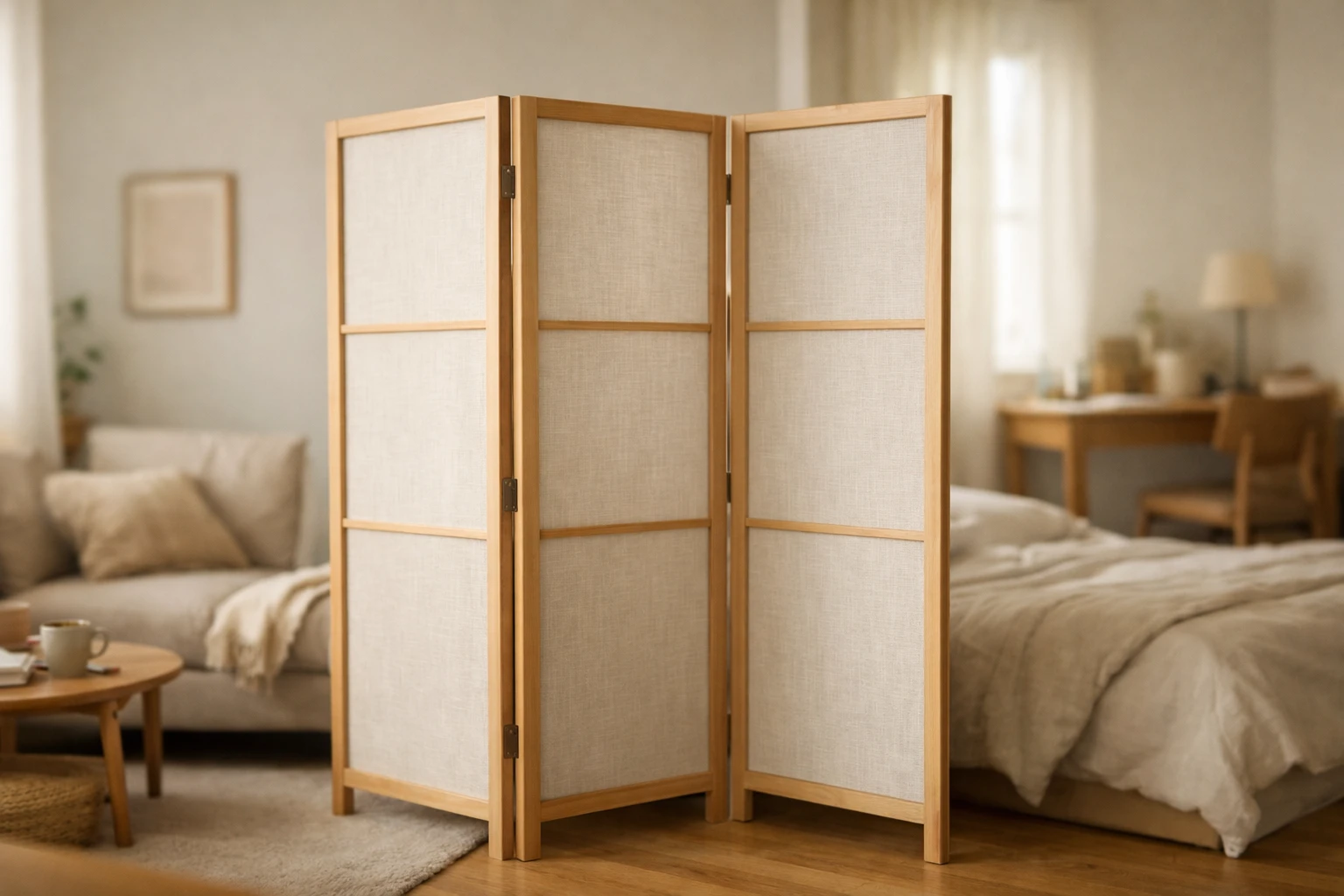
Folding screens have a way of quietly solving problems that permanent walls can’t. When a room needs separation—but not construction—a lightweight divider often makes more sense than anything fixed.
A fabric folding screen sits in that middle ground. It doesn’t pretend to be a wall. It doesn’t block sound. But it does create visual boundaries, soften a space, and stay flexible enough to move, fold, or disappear when you no longer need it.
This guide walks through how to build one thoughtfully—without rushing into measurements before understanding whether this type of divider is actually right for your space.
Is a Fabric Folding Screen the Right Choice?
Before cutting wood or buying fabric, it’s worth being honest about what a fabric folding screen does well—and where it falls short.
Where it works best:
- Studio apartments that need visual zoning
- Bedrooms that need light separation, not isolation
- Temporary work-from-home setups
- Rental spaces where walls aren’t an option
Where it doesn’t:
- Spaces that require sound privacy
- High-traffic walkways where fabric gets brushed constantly
- Homes with pets that pull or scratch fabric
Fabric screens are about soft separation, not enclosure. If that’s the goal, this build makes sense.
If you’re still weighing whether a folding screen is the right approach, this broader guide on room divider ideas for small and flexible spaces explores other ways to divide a room—and when a divider may not be the best solution at all.
Design Decisions That Matter More Than You Think
Most DIY folding screens fail not because of bad craftsmanship, but because of rushed decisions early on.
- Panel height: Taller panels create privacy but reduce stability. Shorter panels feel lighter but expose more of the space behind them.
- Panel width: Wider panels fold less gracefully. Narrow panels fold beautifully but require more hinges.
- Fabric weight: Lightweight fabric allows light to pass through but moves easily. Heavier fabric blocks light better but needs stronger tension.
- Why removable fabric matters: Fabric gets dusty. Styles change. Washability matters. Designing panels that slide out instead of being stapled in makes the screen usable long-term.
Materials and Tools
The measurements below reflect a balanced, stable folding screen suitable for most small living spaces. Adjust proportionally if scaling up or down.
Materials:
- Pine boards: nominal 1×3 lumber (actual ~0.75 × 2.5 in), cut for three panels
- Panel height recommendation: 60–65 in (152–165 cm)
- Panel width recommendation: 15–18 in (38–46 cm) per panel
- Wood dowels: 5/16 in diameter
- Wood glue (interior-grade)
- Brad-style hinges (2 per panel joint)
- Medium-weight fabric (cotton, linen, or linen blend)
- Tension rods sized 1–2 in wider than interior frame width
Tools:
- Drill with 5/16 in drill bit
- Hand saw or miter saw
- Measuring tape and pencil
- Sandpaper (120–180 grit)
- Clamps (recommended for alignment)
Building the Wooden Frames
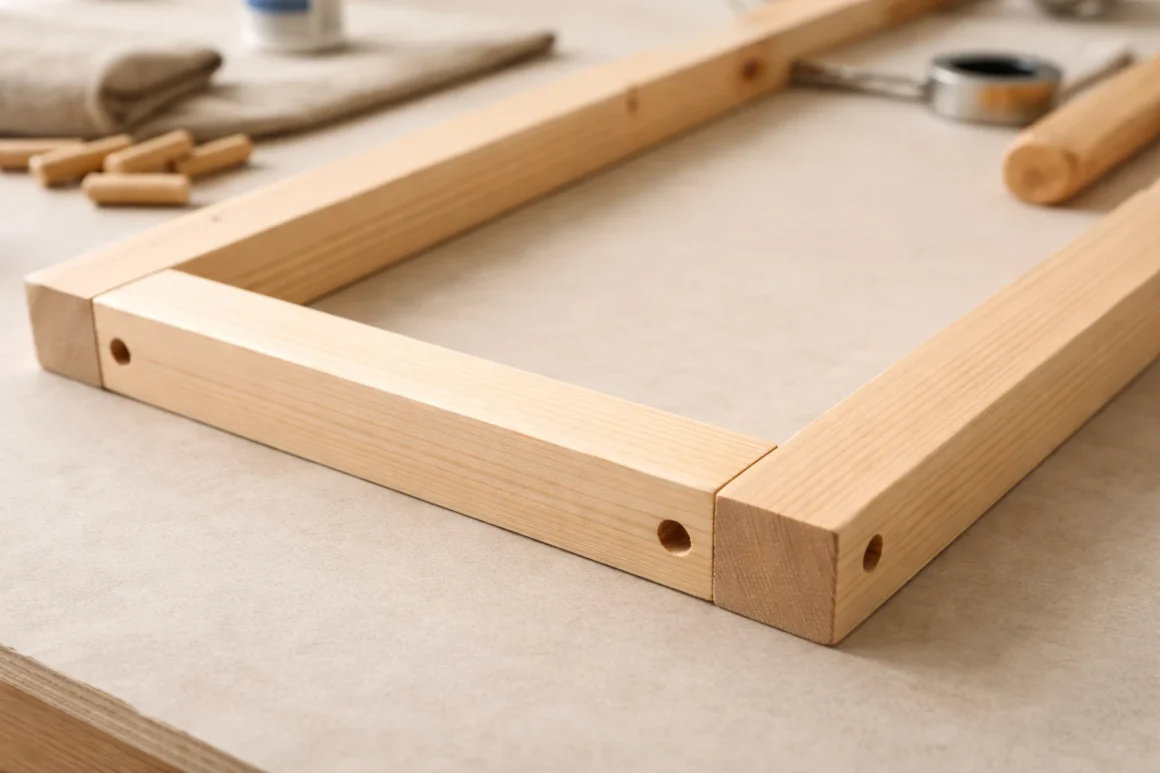
Each panel is built as a simple rectangular frame. Accuracy at this stage determines how smoothly the screen will fold later.
- Cut vertical and horizontal boards so all panels match exactly in height and width.
- Sand all edges before assembly to prevent fabric snags and uneven joints.
- Mark dowel locations approximately 1 in (25 mm) from each joint edge.
- Drill dowel holes to a depth of ¾ in (19 mm), keeping the drill perpendicular.
- Dry-fit dowels without glue to confirm alignment.
- Apply wood glue, assemble the frame, and clamp firmly.
- Allow the frame to cure flat for at least 6–8 hours before handling.
Frames that cure while twisted will never fold cleanly. Keep them flat while drying.
Installing the Hinges
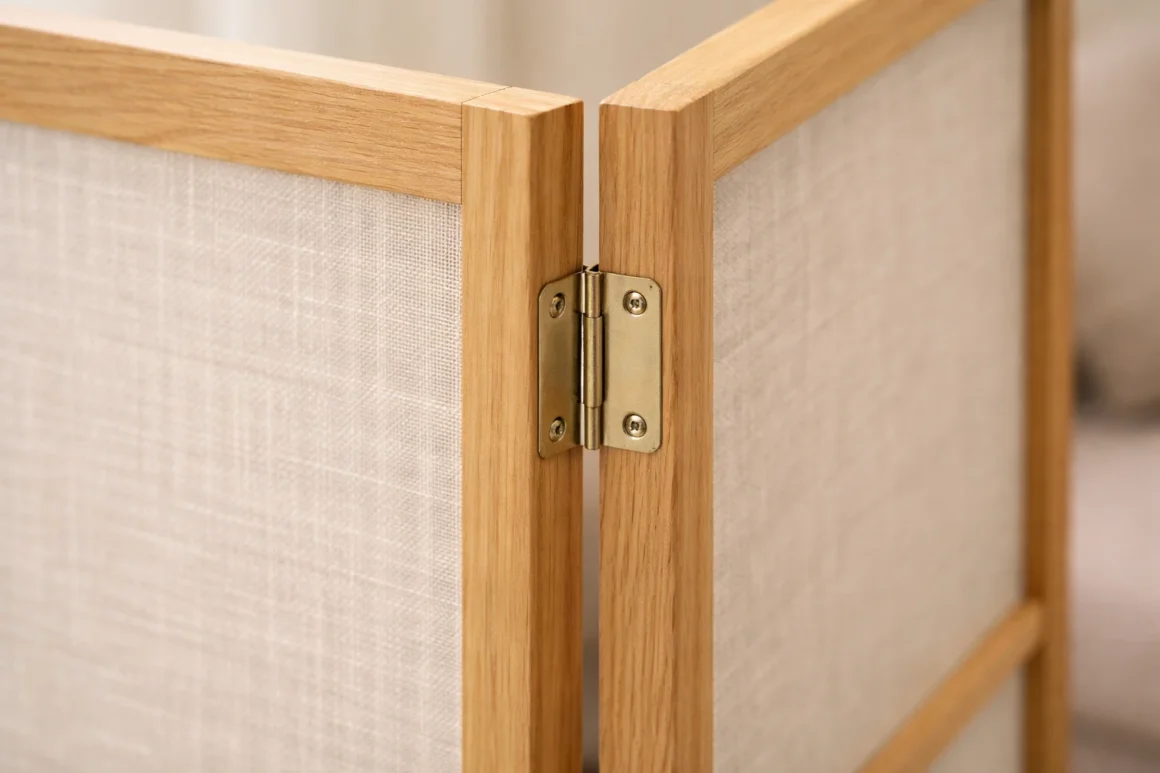
Hinge placement determines how the folding screen opens, folds, and stores. While this step looks simple, incorrect hinge orientation is one of the most common causes of unstable or awkward screens.
- Lay all panels flat on the floor in their final folding order.
- Align the vertical edges of adjacent panels so they sit flush.
- Position two hinges evenly along each shared edge.
- Attach hinges loosely and test the folding direction.
- Fully tighten screws only after confirming smooth movement.
Creating the Removable Fabric Panels
The removable fabric system is what makes this screen practical long-term.
- Cut fabric panels 1–1.5 in wider than the interior frame opening.
- Finish vertical edges with a narrow hem to prevent fraying.
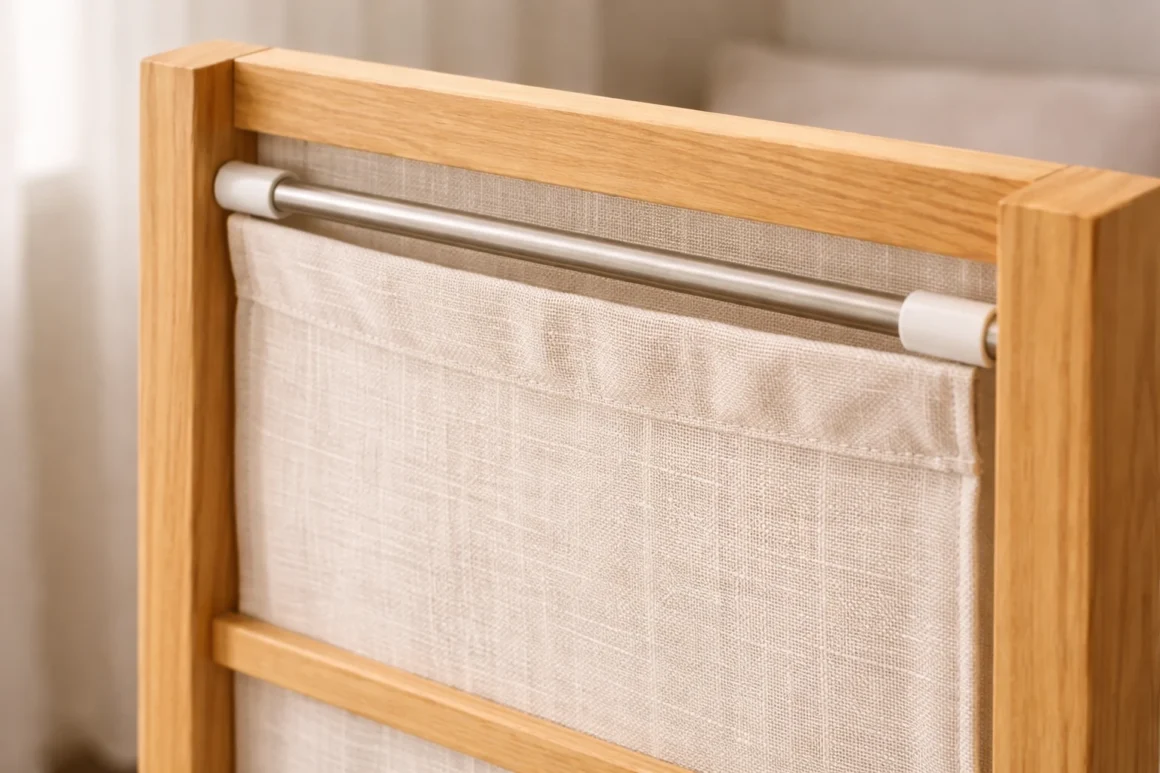
- Create top and bottom sleeves sized to fit the tension rods snugly.
- Insert tension rods and extend them slightly beyond the interior width.
- Press the rods into place so the fabric sits flat but not overstretched.
If the fabric bows inward, reduce rod tension. If it sags, increase tension slightly—never rely on fabric stretch alone.
Styling and Placement
A fabric folding screen works best when it is treated as a soft boundary rather than a rigid divider. Placement and orientation matter as much as construction.
- Position the screen slightly angled rather than perfectly flat to create depth.
- Place it near windows to diffuse light instead of blocking it completely.
- Use it to define corners or zones rather than splitting a room in half.
- Keep clearance around hinges so panels can fold without friction.
Neutral fabrics allow the screen to blend into the space, while patterned fabrics turn it into a focal point. Choose one intention and stay consistent.
What This Folding Screen Will Not Do
Being clear about limitations helps set realistic expectations and avoids disappointment later.
- It will not block sound or provide acoustic privacy.
- It will not function as a permanent wall or structural divider.
- It will not withstand heavy impact or rough handling.
This folding screen is designed for flexibility and visual separation—not isolation or security.
DIY disclaimer: This project involves basic woodworking tools. Always wear appropriate safety equipment and adjust measurements to suit your space. If you are unsure about tool handling or structural stability, consult a professional before proceeding.
Final Thoughts
A fabric folding screen isn’t about solving every problem in a room. It’s about solving the right one.
If you need something movable, lightweight, and honest about its limitations, this build makes sense. If you need silence, security, or permanence, it doesn’t.
Author & Editorial Review
Written by Perla Irish
Perla Irish is a design writer covering interior materials, everyday home decisions, and real-world finish performance. Her work focuses on how design choices hold up in lived-in spaces—especially when flexibility, maintenance, and long-term usability matter.
Editorial Review: Reviewed by the LivingBitsAndThings editorial team to ensure clarity, accuracy, and real-world applicability, with an emphasis on honest limitations and long-term usability. Learn more about our editorial review process.
Originally published: March 2019 · Last updated: January 2026

Leave a Reply