
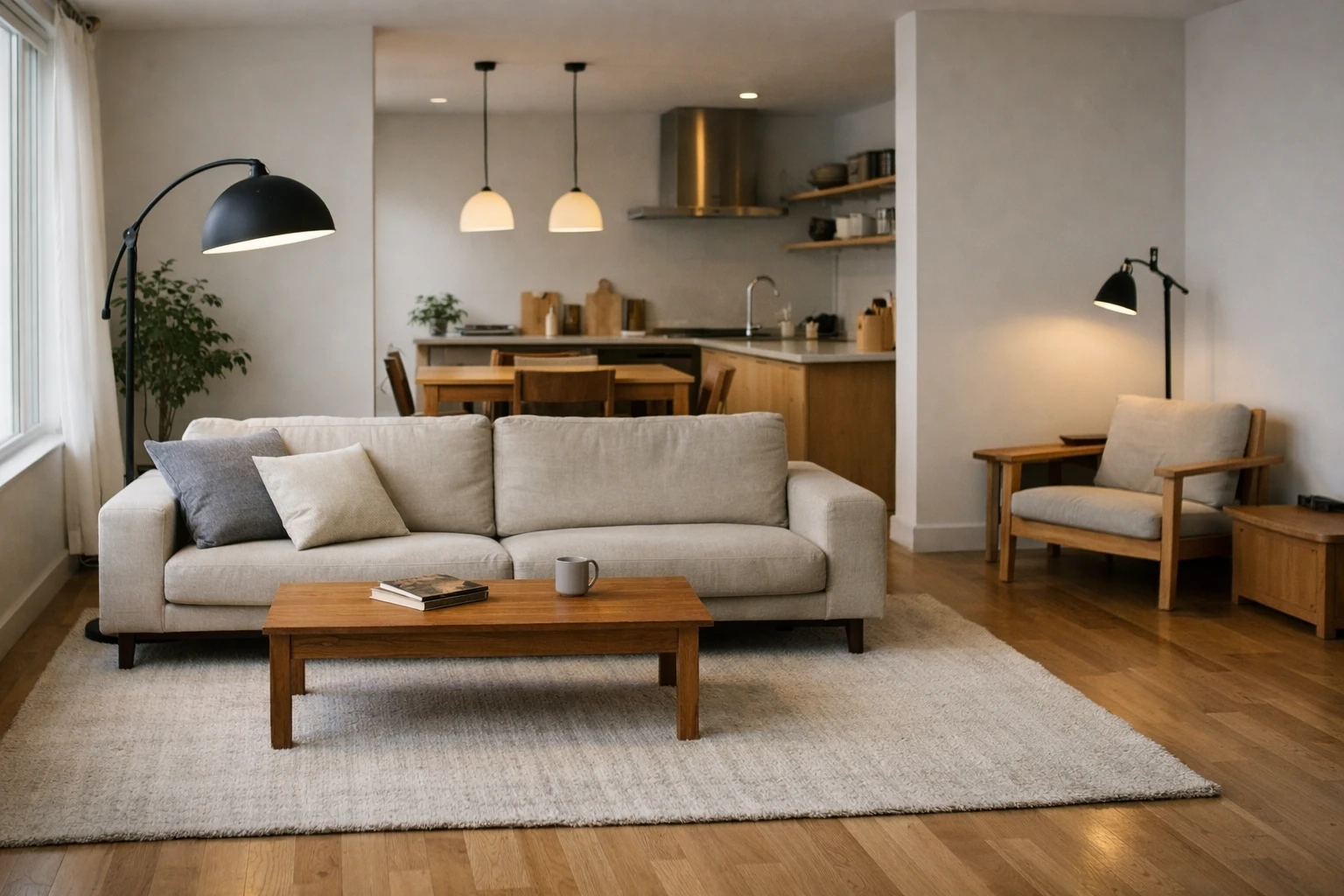
Not every space needs to be fully open, and not every problem calls for a permanent wall. In many homes—especially apartments, rentals, and multi-use rooms—the challenge isn’t a lack of space, but a lack of definition.
Room dividers sit in that in-between zone. They don’t enclose a space completely, and they rarely solve issues like sound on their own. What they can do, when chosen carefully, is create visual separation, guide how a room is used, and make shared spaces feel more intentional.
This guide looks at different ways to divide a room without committing to permanent construction. Some solutions are soft and temporary, others more structured but still flexible. The goal isn’t to prescribe one “best” option, but to help you understand which approaches actually work in small and adaptable living spaces—and which ones tend to create new problems.
What a Room Divider Can (and Can’t) Do
Room dividers are often expected to do more than they realistically can. Understanding their strengths—and their limits—helps prevent disappointment and leads to better design decisions.
What a room divider can do well:
- Create visual separation between different activities in the same room.
- Define zones, such as sleeping, working, or dining areas, without altering the structure of the space.
- Influence how people move through a room by subtly guiding circulation.
- Add a sense of order to open layouts that otherwise feel undefined.
What a room divider cannot reliably do:
- Block sound or provide true acoustic privacy.
- Replace a permanent wall in terms of security or insulation.
- Solve fundamental layout problems caused by insufficient space.
Most room dividers work best when they are treated as visual tools rather than architectural ones. They shape how a space feels and functions day to day, but they rarely eliminate every compromise. Keeping expectations realistic makes it easier to choose solutions that improve a room instead of complicating it.
Soft & Temporary Room Dividers
Soft and temporary dividers are often the most practical choice for small homes, rentals, and spaces that need to change over time. These solutions prioritize flexibility and reversibility over permanence, making them easier to live with day to day.
Rather than fully enclosing a space, soft dividers create visual boundaries. They suggest separation without cutting off light, airflow, or the ability to reconfigure a room later.
Fabric folding screens are one of the clearest examples of this approach. They offer immediate separation, can be folded away when not needed, and don’t require permanent installation. Their effectiveness depends heavily on proportion, material choice, and realistic expectations about what they can and can’t do.
When designed thoughtfully—using stable frames and removable fabric panels—a folding screen can hold up to regular use while remaining easy to maintain. This makes it a good option for bedrooms, shared living areas, or temporary work zones where privacy is visual rather than acoustic.
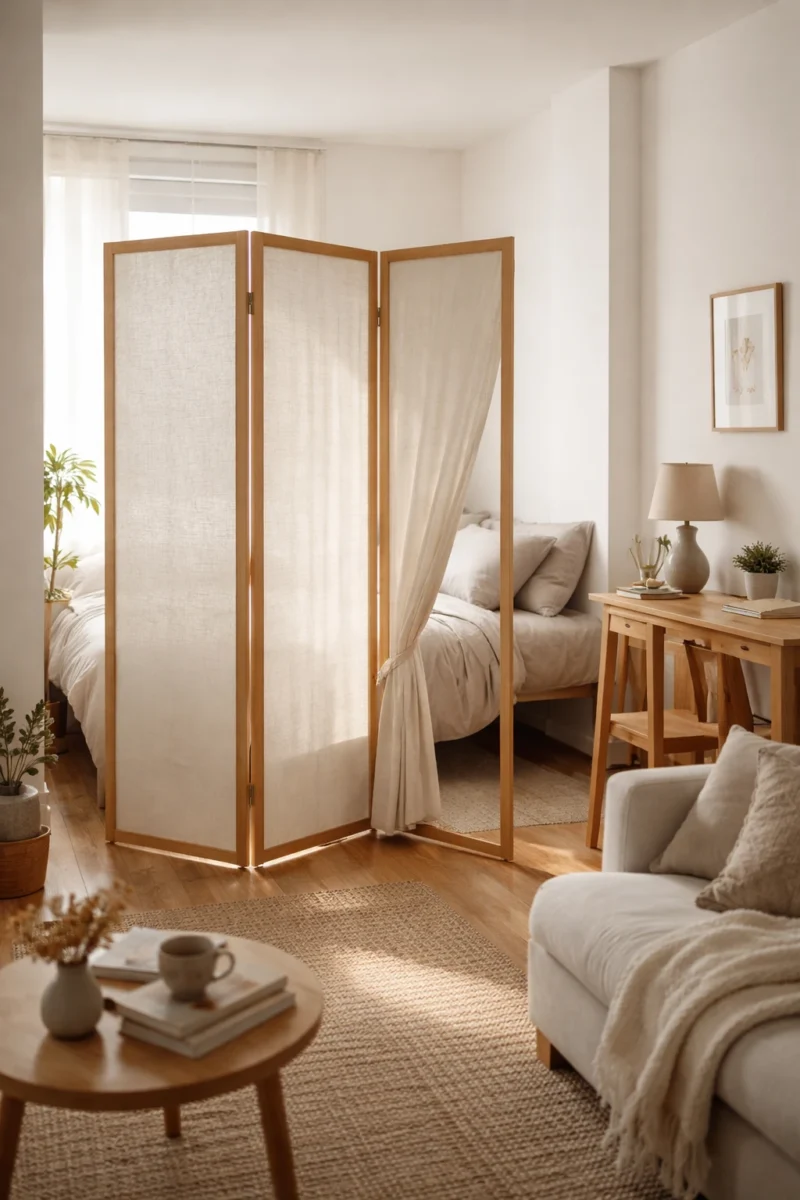
See how a fabric folding screen can be built and used in practice, including design decisions, material considerations, and limitations to keep in mind.
Other soft divider options fall into a similar category:
- Curtains or fabric panels mounted on ceiling tracks.
- Lightweight freestanding panels that can be moved or stored easily.
- Temporary screens used to define corners rather than split rooms completely.
These approaches work best when flexibility matters more than isolation. They are easy to remove, adjust, or replace as needs change—an important advantage in spaces that serve multiple purposes.
Semi-Structured Dividers (More Presence, Still Flexible)
Semi-structured dividers sit between soft screens and permanent walls. They introduce more visual weight and stability into a space, while still allowing a room to adapt over time.
These solutions tend to work best in open layouts where some separation is needed, but full enclosure would feel too heavy or restrictive.
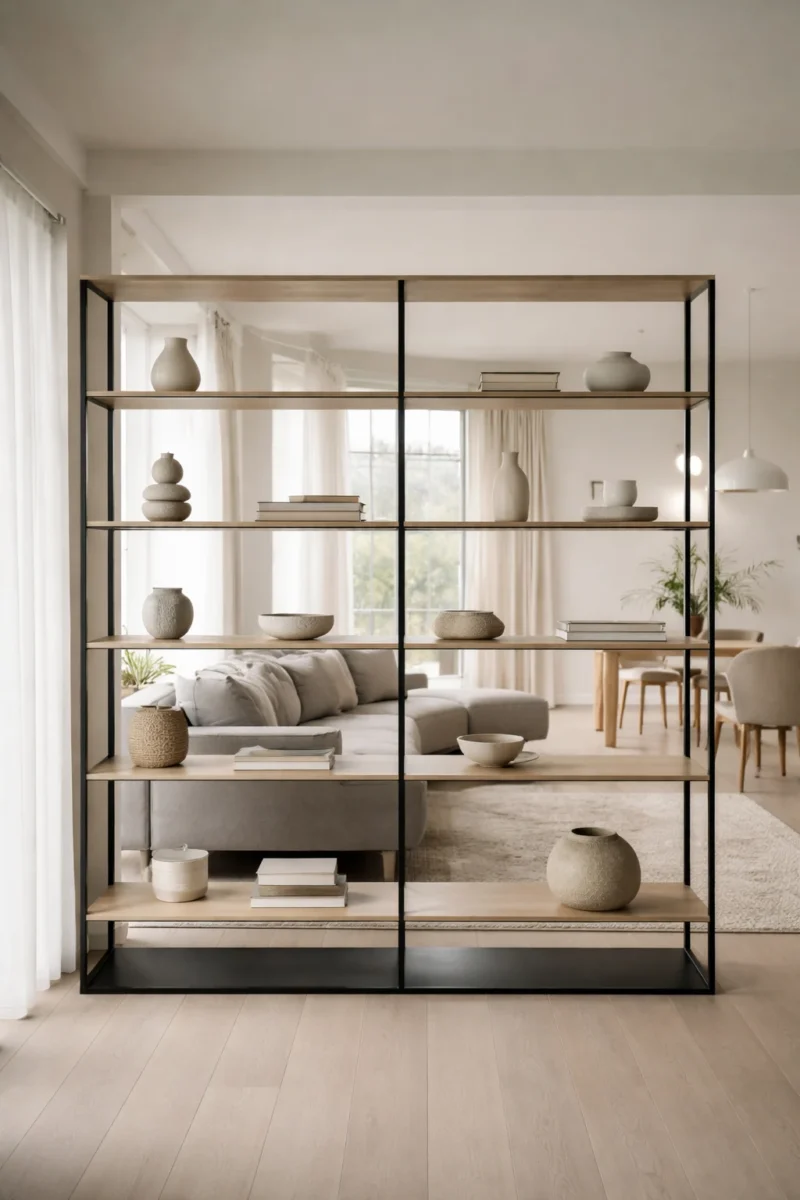
Open shelving is one of the most common examples. When used as a divider, it defines zones while maintaining sightlines and allowing light to pass through. The trade-off is visual noise—shelves that are too full can make a space feel cluttered rather than organized.
Bookcases with backing offer a bit more separation than open shelves, especially when placed perpendicular to walls. They can provide useful storage, but they also add significant weight and often commit the layout more than expected.
Slatted or panel-style dividers introduce rhythm and texture without fully closing off a room. Vertical slats, in particular, can create a sense of division while preserving airflow and light, though they tend to be more visually dominant than fabric or curtain-based solutions.
Compared to soft dividers, semi-structured options require more consideration upfront. Their size, orientation, and visual mass play a larger role in how a room feels once installed. When chosen carefully, they can offer a balanced compromise—more presence than fabric screens, but far less permanence than building a wall.
Furniture-Based Division (No Build Required)
Not every space needs a divider you have to build or install. In many cases, furniture placement alone can create clear zones without adding new elements to the room.
Sofa placement is one of the simplest tools. Turning a sofa perpendicular to a wall or centering it within an open plan can separate living and dining areas while preserving circulation. The boundary is implied rather than enforced, which often feels more natural in small spaces.
Rugs and lighting work together in a similar way. A rug anchors a function—such as seating or working—while lighting reinforces it. This approach doesn’t block sightlines, but it does tell the eye where one zone ends and another begins.
Low storage pieces, such as benches, credenzas, or media units, can also define areas without adding visual height. They maintain openness while offering practical storage, though they provide less separation than taller dividers.
Furniture-based division is especially useful in rentals or frequently changing homes. Because nothing is fixed, layouts can evolve as needs shift. The limitation is subtlety—these methods guide behavior and movement, but they rarely create a sense of privacy on their own.
When a Divider Makes Things Worse
Room dividers are often introduced to solve one problem, but in some spaces they end up creating new ones. Recognizing these situations early can prevent layouts from feeling more cramped or uncomfortable than before.
Very small rooms are the most common example. When floor area is already limited, adding any form of divider—soft or structured—can disrupt circulation and make a space feel tighter rather than more organized.
Spaces with high acoustic needs also tend to suffer from misplaced dividers. Screens, shelving, and curtains rarely provide meaningful sound isolation. In rooms where quiet or privacy is essential, dividers can create a false sense of separation without actually addressing the problem.
Primary walkways are another risk area. Dividers placed too close to natural paths of movement often become obstacles, forcing awkward detours and interrupting how a room is used day to day.
Over-dividing is a quieter issue. Adding too many visual boundaries can fragment a space, breaking sightlines and light flow to the point where the room feels disjointed rather than intentional.
In these cases, it’s often better to step back and reconsider the layout itself—furniture placement, lighting, or storage choices—before introducing another element. A divider should reduce friction in a space, not add to it.
In basements especially, uneven concrete floors can quietly influence how partitions sit and perform over time. Addressing surface irregularities before introducing dividers helps prevent small alignment issues from becoming long-term adjustments.
Choosing the Right Divider for Your Space
Choosing a room divider is less about finding the “best” option and more about understanding the conditions of the space it will live in. A solution that works well in one room can easily fail in another.
Before settling on any type of divider, it helps to consider a few practical questions:
- How much separation do you actually need? Visual separation is very different from acoustic or physical privacy.
- How permanent should the solution be? Rentals and evolving households benefit from dividers that can be removed or repositioned easily.
- How much light should pass through? Blocking light often changes how a room feels more than expected.
- Is circulation more important than division? A divider that interrupts natural movement can quickly become frustrating.
- Will the space need to change again? The more flexible your needs, the lighter the solution should be.
Answering these questions usually narrows the options quickly. Soft dividers tend to work best when flexibility and light matter most. Semi-structured solutions suit spaces that need clearer definition but still benefit from openness. Furniture-based approaches are often enough when the goal is guidance rather than separation.
A good divider should feel proportional to the room and appropriate to how the space is used. If it requires constant adjustment, blocks movement, or draws attention to itself for the wrong reasons, it’s likely the wrong choice.
Separation That Fits the Way You Live
Dividing a space is rarely about creating more rooms. More often, it’s about making an existing layout work better—adding clarity without taking flexibility away.
The most successful room dividers tend to be the ones that respect how a space is actually used. They allow light to move through, preserve circulation, and can be adjusted or removed as needs change. When a divider starts to dictate behavior rather than support it, the balance is usually off.
For spaces that benefit from soft boundaries, solutions like fabric folding screens can offer a practical middle ground—providing visual separation without committing to permanent construction. This guide on building a fabric folding screen shows how one of these options works in practice, including where it succeeds and where it falls short.
Ultimately, the right divider is the one that fits the way you live now, while leaving room for how that space might need to change later.
Author & Editorial Review
Written by Perla Irish
Perla Irish is a design writer covering interior materials, everyday home decisions, and real-world finish performance. Her work focuses on how design choices hold up in lived-in spaces, particularly where flexibility and long-term usability matter.
Editorial Review: This article was reviewed by the LivingBitsAndThings editorial team to ensure clarity, accuracy, and real-world applicability. Our editorial standards emphasize honest limitations, practical decision-making, and long-term relevance. Read more about our editorial review process.
Originally published: January 2026 · Last reviewed: January 2026
Leave a Reply